India generates millions of tonnes of organic waste every year from households, agriculture, food industries, and municipalities. Managing this waste efficiently is a growing challenge. This is where organic waste to energy emerges as a powerful and sustainable solution. Instead of sending biodegradable waste to landfills, it can be converted into valuable energy such as biogas, electricity, and biofuels.
For businesses, municipalities, and industries, adopting organic waste to energy systems is not just about waste management—it’s about reducing costs, generating energy, and contributing to environmental sustainability.
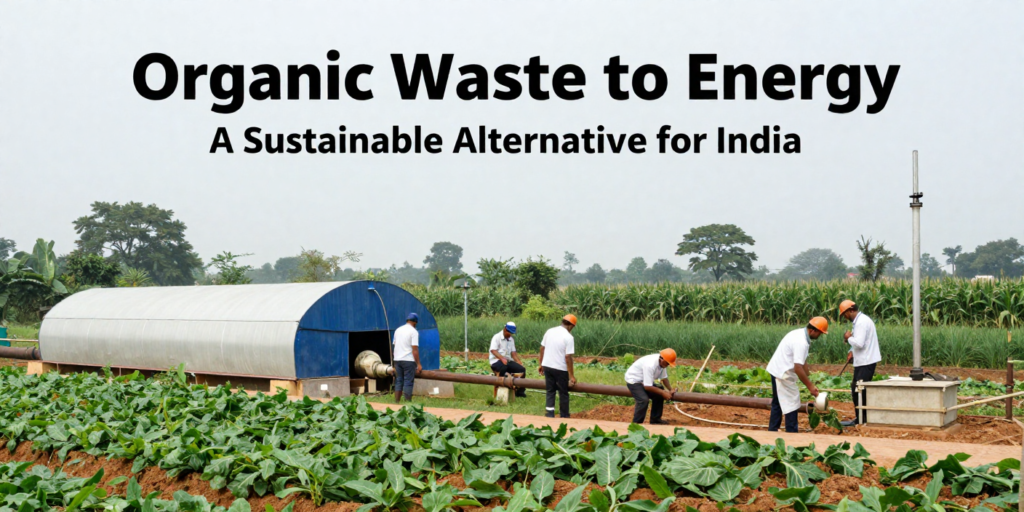
What Is Organic Waste to Energy?
Organic waste to energy refers to the process of converting biodegradable waste into usable energy. This includes food waste, agricultural residue, animal waste, and other organic materials.
Instead of decomposing in landfills and releasing harmful greenhouse gases like methane, this waste is processed using scientific methods to generate:
- Biogas (methane-rich gas)
- Electricity
- Heat energy
- Organic fertilizers
This approach supports both waste reduction and renewable energy generation, making it highly relevant for India’s growing sustainability needs.
How Organic Waste to Energy Works
Organic Waste to Energy Process in India
Understanding how organic waste to energy works is essential for businesses looking to adopt this solution.
1. Waste Collection and Segregation
Organic waste is collected from sources like households, hotels, farms, and food processing units. Proper segregation is critical to ensure efficiency.
2. Pre-Treatment
The waste is cleaned, shredded, or processed to remove impurities and improve decomposition efficiency.
3. Anaerobic Digestion
The prepared waste is placed in a sealed system where microorganisms break it down in the absence of oxygen. This produces biogas.
4. Energy Conversion
The generated biogas is used for:
- Electricity generation
- Cooking fuel
- Industrial heating
5. Residue Utilization
The leftover material, known as digestate, is used as organic fertilizer, creating additional value.
7 Powerful Benefits of Organic Waste to Energy
1. Reduces Landfill Dependency
Organic waste no longer occupies landfill space, reducing environmental burden.
2. Generates Renewable Energy
Biogas and electricity produced can replace conventional energy sources.
3. Cuts Greenhouse Gas Emissions
Prevents methane release from landfills, helping fight climate change.
4. Supports Circular Economy
Waste is converted into valuable resources, promoting sustainability.
5. Lowers Waste Management Costs
Businesses can reduce disposal expenses and even create revenue streams.
6. Produces Organic Fertilizer
The by-product improves soil health and reduces chemical fertilizer usage.
7. Ideal for India’s Waste Composition
A large portion of India’s waste is organic, making this solution highly scalable.
Why Organic Waste to Energy Is Critical for India
India’s urbanization and industrial growth are increasing waste generation rapidly. At the same time, energy demand is rising. Organic waste to energy bridges both challenges effectively.
Key Reasons for Adoption:
- High volume of biodegradable waste
- Rising landfill issues in urban areas
- Government push for renewable energy
- Need for decentralized waste management systems
- Increasing sustainability awareness among businesses
For cities like Pune, Mumbai, and Delhi, decentralized organic waste to energy plants can significantly reduce waste transportation and landfill pressure.
Business Opportunities in Organic Waste to Energy
For entrepreneurs and industries, organic waste to energy is not just an environmental solution—it is a strong business opportunity.
Potential Use Cases:
- Hotels and restaurants managing food waste
- Agricultural businesses converting crop residue
- Municipal corporations handling city waste
- Industrial units reducing disposal costs
- Housing societies implementing decentralized systems
Revenue Streams:
- Sale of biogas or electricity
- Organic fertilizer sales
- Waste management service contracts
- Carbon credit opportunities
Businesses adopting this model can position themselves as sustainable and future-ready.
Technologies Used in Organic Waste to Energy
Different technologies are used depending on scale and waste type:
Anaerobic Digestion
Most widely used for biogas generation from organic waste.
Composting with Energy Recovery
Combines composting with heat or gas recovery systems.
Biomethanation Plants
Common in India for municipal and industrial organic waste.
Hybrid Systems
Integrating multiple technologies for higher efficiency.
Choosing the right technology depends on waste volume, type, and intended energy output.
Challenges to Consider
While organic waste to energy has strong potential, businesses should consider:
Segregation Issues
Mixed waste reduces efficiency and output quality.
Initial Investment
Setup costs for plants and infrastructure can be high.
Technical Expertise
Requires proper operation and maintenance.
Policy and Compliance
Must align with environmental regulations in India.
Despite these challenges, long-term benefits outweigh initial barriers when implemented correctly.
Future of Organic Waste to Energy in India
India is moving toward sustainable waste management and renewable energy adoption. Organic waste to energy is expected to play a major role in this transition.
Government initiatives, smart city projects, and increasing awareness among businesses are driving adoption. With advancements in technology and better policy support, the sector is expected to grow rapidly in the coming years.
Organizations that invest early will gain a competitive advantage in sustainability and cost efficiency.
Organic waste to energy is not just a trend—it is a necessity for India’s sustainable future. By converting biodegradable waste into valuable energy and resources, this approach solves two major problems: waste management and energy generation.
For businesses, municipalities, and industries, adopting organic waste to energy systems offers environmental benefits, cost savings, and new revenue opportunities. With the right strategy, technology, and execution, it can become a key driver of sustainable growth in India.