Introduction
If you’re wondering how to convert waste to energy, you’re not alone. With rising waste management challenges and increasing energy demand in India, waste-to-energy (WTE) solutions are becoming a profitable and sustainable opportunity. Businesses, municipalities, and entrepreneurs are actively exploring ways to turn garbage into electricity, fuel, and heat.
In this guide, you’ll learn how to convert waste to energy, the technologies involved, investment requirements, and how to implement a successful project in India.
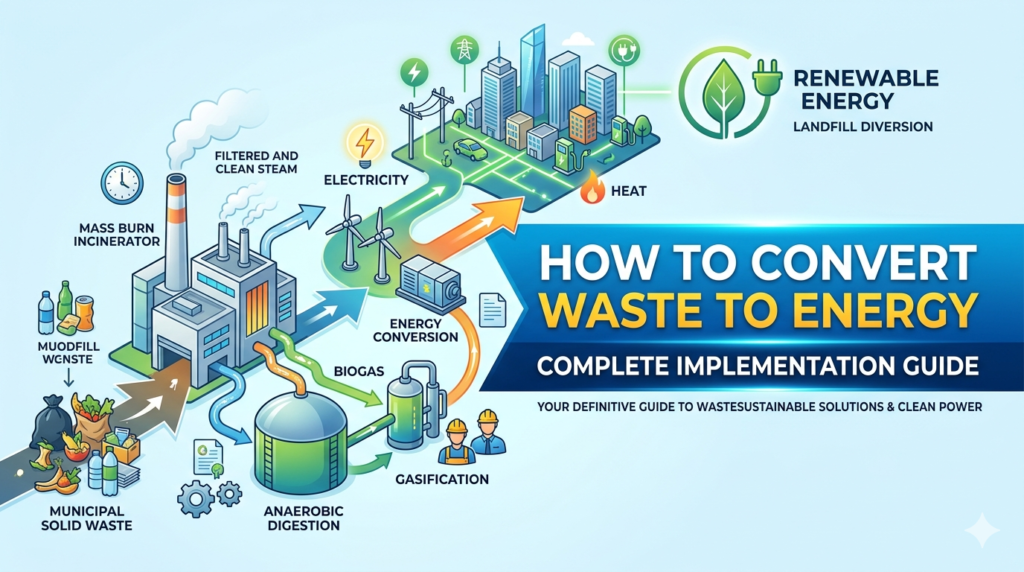
What is Waste to Energy?
Waste to Energy (WTE) is the process of converting municipal, industrial, or agricultural waste into usable forms of energy such as:
- Electricity
- Heat
- Biofuels (biogas, biodiesel)
Instead of sending waste to landfills, WTE reduces pollution while generating value.
How to Convert Waste to Energy (Step-by-Step Process)
1. Waste Collection & Segregation
The first step in how to convert waste to energy is proper waste segregation:
- Organic waste (food, biomass)
- Recyclable waste
- Non-recyclable waste
Segregation improves efficiency and reduces processing cost.
2. Waste Processing & Preparation
Waste is shredded, dried, or compressed depending on the technology used. This ensures uniform input for energy conversion systems.
3. Choose the Right Technology
Selecting the right method is critical when deciding how to convert waste to energy:
Incineration
- Burns waste at high temperatures
- Produces steam → electricity
- Suitable for mixed municipal waste
Anaerobic Digestion
- Breaks down organic waste without oxygen
- Produces biogas (methane)
- Ideal for food & agricultural waste
Pyrolysis
- Heats waste in absence of oxygen
- Produces oil, gas, and char
- Suitable for plastic and rubber waste
Gasification
- Converts waste into syngas
- Used for electricity and fuel production
4. Energy Generation
The processed waste is converted into:
- Electricity via turbines
- Biogas for cooking or fuel
- Heat for industrial use
5. Waste Residue Management
Ash or residue is treated and safely disposed or reused in construction materials.
Cost of Waste to Energy Plant in India
Understanding cost is essential when planning how to convert waste to energy:
| Plant Type | Investment Range |
|---|---|
| Small Biogas Plant | ₹5 lakh – ₹50 lakh |
| Medium WTE Plant | ₹5 crore – ₹50 crore |
| Large Municipal Plant | ₹100+ crore |
Costs depend on:
- Technology used
- Land availability
- Waste volume
- Government approvals
Government Support & Policies in India
India strongly supports waste-to-energy initiatives:
- Subsidies for biogas plants
- Support from Ministry of New and Renewable Energy (MNRE)
- Swachh Bharat Mission incentives
- State-level policies for WTE projects
This makes it easier for businesses to implement projects.
Business Opportunities in Waste to Energy
If you’re exploring how to convert waste to energy as a business, here are profitable models:
1. Municipal Contracts
Partner with local governments to process city waste.
2. Industrial Waste Solutions
Help factories convert their waste into energy.
3. Biogas Plants for Farms
Convert agricultural waste into fuel and electricity.
4. Plastic to Fuel Business
Use pyrolysis to convert plastic waste into oil.
Challenges in Waste to Energy Projects
Before implementing, understand key challenges:
- High initial investment
- Waste segregation issues
- Regulatory approvals
- Public awareness
Solution: Work with experienced consultants and technology providers.
Benefits of Waste to Energy
Why invest in learning how to convert waste to energy?
✅ Environmental Benefits
- Reduces landfill waste
- Lowers greenhouse gas emissions
✅ Economic Benefits
- Generates revenue from waste
- Reduces energy costs
✅ Social Impact
- Cleaner cities
- Job creation
How to Start a Waste to Energy Project in India
Follow this roadmap:
- Market research & feasibility study
- Identify waste source
- Select technology
- Secure funding
- Get government approvals
- Plant setup & operations
Expert Tips for Success
- Start small with pilot projects
- Focus on waste segregation
- Choose scalable technology
- Partner with local authorities
- Use automation for efficiency
Now that you understand how to convert waste to energy, it’s clear that this is not just an environmental solution but a powerful business opportunity in India. With increasing waste generation and rising energy demand, WTE projects are the future of sustainable development.
Whether you’re a startup, industrialist, or government contractor, entering this space today can position you as a leader in tomorrow’s green economy.
Looking to start a waste-to-energy project in India?
Get expert consultation on:
- Technology selection
- Project planning
- ROI estimation
- End-to-end implementation
Start your waste-to-energy journey today.