India is facing a massive waste management crisis. With rapid urbanization and industrial growth, the volume of waste generated daily is increasing at an alarming rate. This is where the benefits of waste to energy plants become crucial not just for managing waste but also for creating sustainable energy solutions.
Waste to Energy (WTE) plants convert municipal and industrial waste into electricity, heat, or fuel, offering a dual advantage: waste reduction and energy generation. For industries and cities across India, this technology is no longer optional it’s becoming essential.
What Are Waste to Energy Plants?
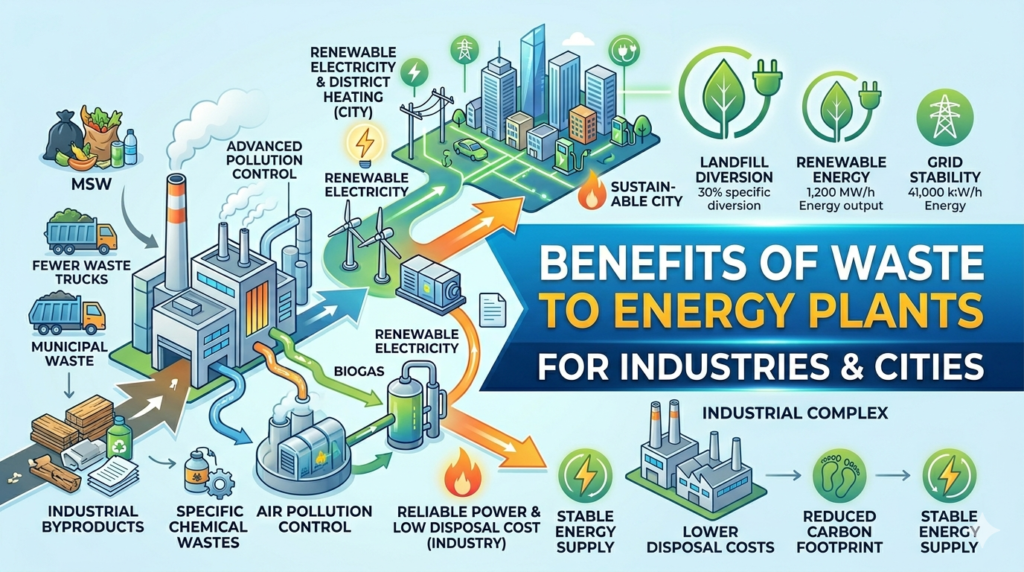
Waste to Energy plants are facilities that process waste materials and convert them into usable energy through technologies like incineration, pyrolysis, gasification, or anaerobic digestion.
Instead of dumping waste into landfills, these plants extract value from it turning a major problem into a powerful resource.
Why India Needs Waste to Energy Solutions Urgently
India generates over 150,000 tonnes of municipal solid waste daily, and a significant portion remains untreated. Landfills are overflowing, causing environmental hazards, health risks, and land scarcity.
Industries, municipalities, and smart cities are now actively exploring WTE plants to:
- Reduce landfill dependency
- Meet energy demands
- Achieve sustainability targets
- Comply with environmental regulations
7 Powerful Benefits of Waste to Energy Plants
1. Significant Reduction in Landfill Waste
One of the biggest benefits of waste to energy plants is their ability to drastically reduce the volume of waste.
- WTE plants can reduce waste volume by up to 90%
- Minimizes the need for landfill space
- Prevents soil and groundwater contamination
For cities struggling with landfill overflow, this is a game-changing solution.
2. Clean and Reliable Energy Generation
Waste to Energy plants generate electricity and heat from waste materials, providing a consistent and reliable energy source.
- Reduces dependency on fossil fuels
- Supports renewable energy goals
- Provides base-load power (unlike solar or wind)
For industries, this means stable energy supply and reduced operational costs.
3. Environmental Protection and Pollution Control
Improper waste disposal leads to air, water, and soil pollution. WTE plants help control this significantly.
- Reduces methane emissions from landfills
- Minimizes open burning of waste
- Uses advanced emission control systems
Modern WTE plants comply with strict environmental standards, making them far safer than traditional waste disposal methods.
4. Cost Efficiency for Industries and Municipalities
While the initial investment may seem high, WTE plants offer long-term financial benefits.
- Reduced waste transportation costs
- Lower landfill management expenses
- Revenue generation from energy production
Industries can even turn waste management into a profit center instead of a cost burden.
5. Supports Circular Economy and Sustainability Goals
The concept of a circular economy focuses on reducing waste and maximizing resource efficiency.
Waste to Energy plants align perfectly with this model by:
- Converting waste into valuable energy
- Reducing resource wastage
- Promoting sustainable industrial practices
For businesses, this also enhances brand image and ESG (Environmental, Social, Governance) performance.
6. Job Creation and Economic Growth
WTE projects create employment opportunities across multiple sectors:
- Plant construction and engineering
- Operations and maintenance
- Waste collection and segregation
For cities, this means economic growth along with improved infrastructure.
7. Reduced Dependency on Fossil Fuels
India heavily relies on coal and imported fuels. Waste to Energy plants offer an alternative.
- Diversifies energy sources
- Improves energy security
- Reduces carbon footprint
This is especially important for industries aiming to reduce emissions and comply with sustainability regulations.
Benefits of Waste to Energy Plants for Industries
Industries generate large amounts of waste, including hazardous and non-hazardous materials. WTE plants help industries:
- Manage waste efficiently
- Reduce disposal costs
- Generate captive energy
- Improve sustainability compliance
Manufacturing units, chemical industries, and FMCG sectors can significantly benefit from integrating WTE solutions.
Benefits of Waste to Energy Plants for Cities
Urban areas face immense pressure due to population growth and waste generation. Cities can leverage WTE plants to:
- Achieve smart city goals
- Improve sanitation and hygiene
- Reduce landfill dependency
- Generate electricity for public infrastructure
Cities like Pune, Mumbai, and Delhi are already exploring and implementing such solutions to tackle waste challenges.
Challenges to Consider (And How to Overcome Them)
While the benefits of waste to energy plants are substantial, there are some challenges:
1. High Initial Investment
Solution: Public-private partnerships (PPP models)
2. Waste Segregation Issues
Solution: Awareness campaigns and strict regulations
3. Public Perception
Solution: Transparency and use of advanced pollution control technologies
4. Regulatory Approvals
Solution: Proper planning and compliance with government policies
With the right strategy, these challenges can be effectively managed.
Future of Waste to Energy in India
The future of WTE in India is promising, driven by:
- Government initiatives like Swachh Bharat Mission
- Increasing focus on renewable energy
- Rising urban waste generation
- Corporate sustainability commitments
Experts predict rapid growth in the WTE sector over the next decade, making it a high-potential investment area.
How to Get Started with Waste to Energy Solutions
If you are an industry owner, municipal authority, or investor, here’s how you can begin:
- Conduct a waste audit
- Identify suitable WTE technology
- Partner with experienced solution providers
- Ensure regulatory compliance
- Plan for long-term scalability
The benefits of waste to energy plants go far beyond waste management. They provide a sustainable, efficient, and economically viable solution for both industries and cities in India.
From reducing landfill waste to generating clean energy and supporting economic growth, WTE plants are shaping the future of waste management.
For businesses and governments looking to stay ahead, investing in Waste to Energy is not just an option it’s a strategic necessity.