Introduction
India is rapidly moving towards sustainable waste management and renewable energy solutions. government policies waste to energy India are playing a crucial role in encouraging industries, municipalities, and investors to convert waste into valuable energy.
With increasing urban waste generation and rising energy demand, the Indian government has introduced multiple schemes, subsidies, and regulatory frameworks to promote waste-to-energy (WTE) projects. If you are a business owner, investor, or municipality, understanding these policies can help you unlock profitable and sustainable opportunities.
Why Waste to Energy is a Priority in India
India generates over 150,000 tonnes of municipal solid waste daily, creating both an environmental challenge and an energy opportunity. Waste-to-energy projects help:
- Reduce landfill dependency
- Generate electricity and fuel
- Lower greenhouse gas emissions
- Support circular economy goals
Recognizing these benefits, the government has made WTE a key focus area under renewable energy and urban development missions.
Key Government Policies Waste to Energy India
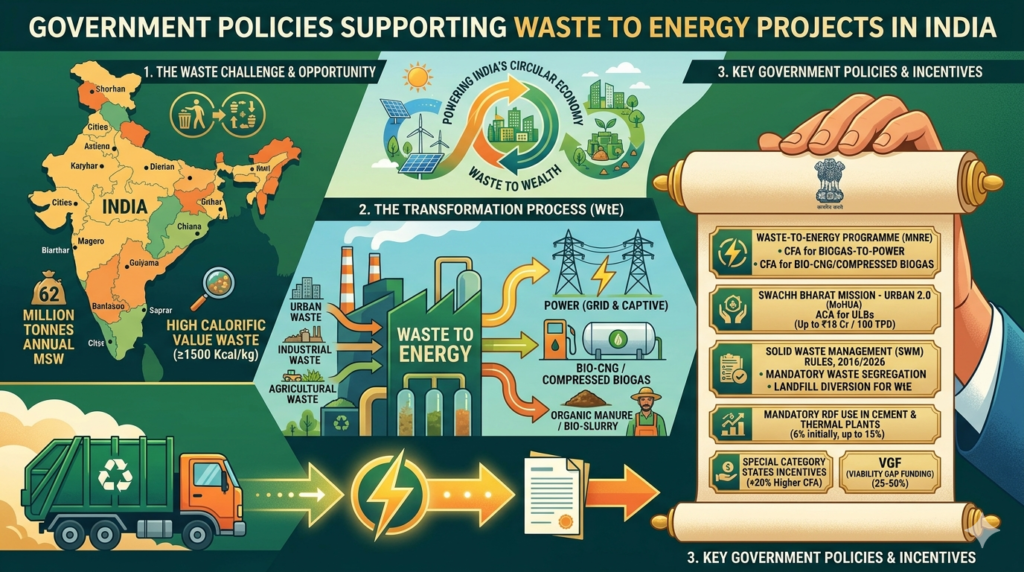
1. National Bioenergy Programme
The National Bioenergy Programme promotes the conversion of organic waste into energy such as biogas, bio-CNG, and power.
Key Benefits:
- Central financial assistance (CFA) for project setup
- Support for biomass and biogas plants
- Incentives for waste processing technologies
This policy is ideal for agricultural waste and organic industrial waste projects.
2. Swachh Bharat Mission (Urban)
The Swachh Bharat Mission emphasizes scientific waste management and encourages municipalities to adopt waste-to-energy solutions.
Key Highlights:
- Funding support for solid waste management infrastructure
- Promotion of PPP (Public-Private Partnership) models
- Focus on waste segregation and processing
This creates strong opportunities for private players to collaborate with local authorities.
3. Waste-to-Energy Policy under MNRE
The Ministry of New and Renewable Energy (MNRE) provides direct incentives for WTE projects.
Incentives Include:
- Capital subsidies for biomass and MSW projects
- Financial support per MW of power generated
- Assistance for technology deployment
This is one of the most important frameworks under government policies waste to energy India for investors.
4. Solid Waste Management Rules 2016
These rules mandate scientific handling and processing of waste, making waste-to-energy projects more necessary than optional.
Key Provisions:
- Mandatory waste segregation
- Encouragement for energy recovery from waste
- Responsibility assigned to urban local bodies
This regulation ensures consistent demand for WTE solutions.
5. State-Level Policies & Incentives
Many Indian states offer additional benefits such as:
- Land at subsidized rates
- Electricity tariff incentives
- Tax exemptions and SGST benefits
- Fast-track approvals
States like Maharashtra, Gujarat, and Tamil Nadu are actively promoting waste-to-energy investments.
Financial Incentives & Subsidies Available
Under various government policies waste to energy India, businesses can access:
- Capital subsidies for plant setup
- Viability Gap Funding (VGF)
- Low-interest loans
- Power purchase agreements (PPAs)
- Renewable Energy Certificates (RECs)
These incentives significantly reduce project risk and improve ROI.
Business Opportunities in Waste to Energy
With strong policy backing, waste-to-energy is becoming a high-growth sector in India.
Opportunities include:
- Municipal solid waste processing plants
- Agricultural waste to biofuel projects
- Industrial waste-to-energy solutions
- Pyrolysis-based plastic waste conversion
Entrepreneurs and companies entering this space early can benefit from government support and increasing demand.
Challenges You Should Know
While policies are supportive, there are still some challenges:
- High initial investment
- Waste segregation issues
- Technology selection complexity
- Regulatory approvals
However, with the right strategy and expert guidance, these challenges can be managed effectively.
How to Start a Waste to Energy Project in India
To leverage government policies waste to energy India, follow these steps:
- Identify waste source (municipal, agricultural, industrial)
- Choose suitable technology (biogas, pyrolysis, incineration)
- Apply for government subsidies and approvals
- Partner with local authorities or private stakeholders
- Secure funding and execute the project
Working with experienced consultants can accelerate approvals and improve project success.
The future of sustainable energy in India lies in effectively managing waste. With strong government policies waste to energy India, the sector offers immense opportunities for businesses, investors, and municipalities.
By leveraging subsidies, incentives, and policy support, you can not only build a profitable venture but also contribute to a cleaner and greener India.
Looking to start or invest in a waste-to-energy project?
Partner with experts who understand government policies, technology, and execution. Get in touch today to explore customized waste-to-energy solutions tailored to your business.