India is at a critical point in its energy journey. With rising fuel costs, increasing pollution, and growing demand for electricity, businesses and industries are actively searching for sustainable alternatives. One solution gaining serious momentum is biomass energy India.
But how does biomass energy compare to traditional fossil fuels in terms of cost and sustainability? More importantly, is it a practical investment for Indian businesses?
Let’s break it down.
What is Biomass Energy?
Biomass energy is produced from organic materials such as agricultural waste, wood chips, crop residues, and animal waste. In a country like India where agriculture plays a massive role this resource is abundant and often underutilized.
Instead of burning waste in open fields (which causes pollution), biomass converts it into usable energy through technologies like:
- Pyrolysis
- Gasification
- Anaerobic digestion
This makes biomass energy India not just an energy solution, but also a waste management strategy.
What Are Fossil Fuels?
Fossil fuels include coal, petroleum, and natural gas. These have been the backbone of India’s energy system for decades.
However, they come with major challenges:
- Limited availability
- Price volatility
- High carbon emissions
- Environmental damage
While fossil fuels are currently dominant, their long-term sustainability is increasingly being questioned.
Cost Comparison: Biomass Energy vs Fossil Fuels
1. Initial Investment
- Biomass Energy:
Higher upfront cost due to plant setup, machinery, and technology installation. - Fossil Fuels:
Lower initial investment since infrastructure is already widely available.
Verdict: Fossil fuels seem cheaper initially.
2. Operating Cost
- Biomass Energy India:
Lower operating cost because raw materials (agricultural waste) are inexpensive and locally available. - Fossil Fuels:
Prices fluctuate due to global markets, import dependency, and geopolitical factors.
Verdict: Biomass wins in long-term operational savings.
3. Fuel Cost Stability
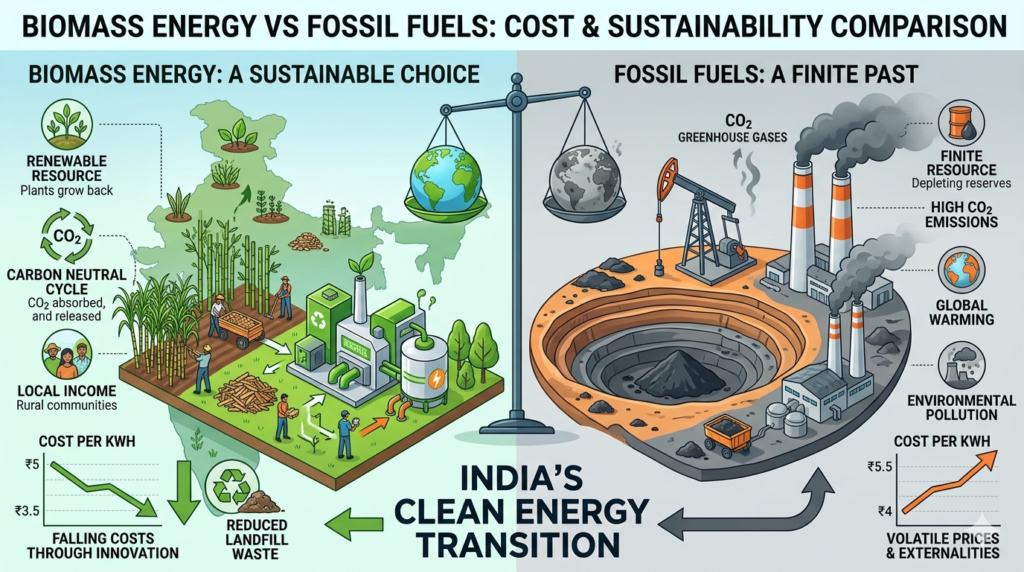
- Biomass: Stable and predictable
- Fossil Fuels: Highly volatile
For industries planning long-term budgets, biomass offers better financial control.
4. Government Subsidies & Incentives in India
India actively promotes renewable energy, including biomass, through:
- Subsidies
- Tax benefits
- Financial assistance schemes
Fossil fuels, on the other hand, are gradually facing stricter regulations.
Verdict: Biomass has strong policy support.
Sustainability Comparison
1. Environmental Impact
- Biomass Energy India:
- Carbon-neutral (releases CO₂ already absorbed by plants)
- Reduces agricultural waste burning
- Lowers air pollution
- Fossil Fuels:
- High carbon emissions
- Major contributor to climate change
- Causes air and water pollution
Biomass is significantly more eco-friendly.
2. Resource Availability
- Biomass: Renewable and continuously generated
- Fossil Fuels: Finite and depleting
India produces millions of tons of agricultural waste annually, making biomass a highly scalable solution.
3. Waste Management Benefits
Biomass energy solves two problems at once:
- Energy generation
- Waste disposal
Instead of burning crop residue (a major issue in India), it can be converted into energy reducing pollution and creating economic value.
Why Biomass Energy is Ideal for India
India has unique advantages that make biomass energy highly viable:
- Massive agricultural output
- Abundant dry waste availability
- Increasing energy demand
- Government push for renewable energy
- Need to reduce pollution in urban and rural areas
- This makes biomass energy India one of the most practical and scalable clean energy solutions available today.
Challenges of Biomass Energy
To make a balanced decision, it’s important to understand the limitations:
- Initial capital investment
- Supply chain management for biomass collection
- Need for technical expertise
- Space requirements for plant setup
However, with proper planning and the right technology partner, these challenges can be effectively managed.
Industrial Use Case: Where Biomass Works Best
Biomass energy is especially effective for:
- Manufacturing units
- Food processing industries
- Textile factories
- Agro-based industries
- Warehouses and large facilities
Businesses that generate or have access to organic waste can significantly reduce energy costs by switching to biomass.
Future of Biomass Energy in India
The future looks promising.
With India targeting ambitious renewable energy goals, biomass is expected to play a major role alongside solar and wind energy.
Key trends include:
- Increased investment in waste-to-energy projects
- Adoption of advanced technologies like pyrolysis
- Growing demand from industries seeking cost efficiency
- Stronger environmental regulations pushing businesses toward cleaner energy
Is Biomass Energy a Better Investment Than Fossil Fuels?
If you’re looking at short-term cost, fossil fuels may seem convenient.
But if your focus is:
- Long-term savings
- Sustainability
- Energy independence
- Compliance with future regulations
Then biomass energy is clearly the smarter choice.
Fossil fuels may still dominate today, but their environmental and economic downsides are becoming impossible to ignore.
On the other hand, biomass energy India offers:
- Sustainable energy production
- Lower long-term costs
- Waste management solutions
- Government support
- Reduced environmental impact
For businesses in India looking to stay competitive, reduce costs, and align with sustainability goals, biomass energy is not just an option it’s a strategic advantage.