Introduction
Waste management is no longer just a compliance requirement it’s a business opportunity. Across India, small and medium enterprises (SMEs) are struggling with rising waste disposal costs, stricter environmental regulations, and increasing pressure to adopt sustainable practices. This is where waste to energy solutions for SMEs come into play.
By converting waste into usable energy, SMEs can reduce operational expenses, minimize environmental impact, and even create an additional revenue stream. Whether you operate in manufacturing, food processing, agriculture, or packaging, adopting waste-to-energy technology can transform how your business handles waste.
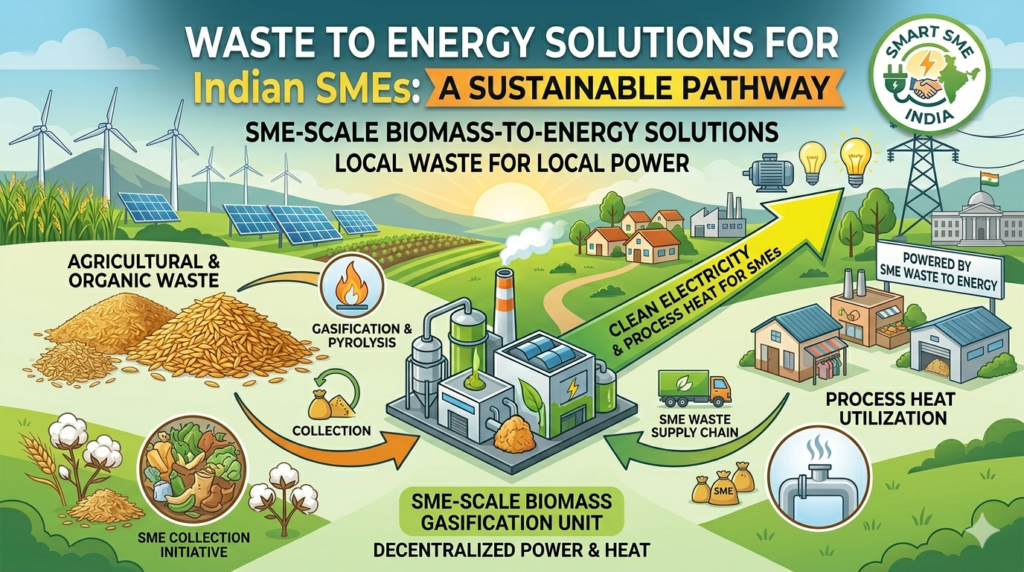
Why SMEs in India Need Waste to Energy Solutions
India generates millions of tonnes of industrial and agricultural waste every year. SMEs contribute a significant portion of this waste but often lack efficient disposal systems.
Here’s why adopting waste-to-energy solutions is critical:
- High Waste Disposal Costs: Landfilling and transportation costs are rising
- Regulatory Pressure: Pollution control norms are becoming stricter
- Energy Demand: SMEs face increasing electricity costs
- Sustainability Goals: Customers prefer eco-friendly businesses
Implementing waste to energy solutions for SMEs helps businesses tackle all these challenges simultaneously.
What Are Waste to Energy Solutions?
Waste to energy (WTE) solutions involve converting waste materials into usable forms of energy such as:
- Electricity
- Heat
- Fuel (biofuels, syngas, bio-oil)
Common technologies used include:
- Pyrolysis
- Gasification
- Anaerobic digestion
- Incineration with energy recovery
These technologies are scalable, making them ideal for SMEs with varying waste volumes.
How Waste to Energy Solutions for SMEs Work
The process typically involves the following steps:
1. Waste Collection & Segregation
Proper segregation ensures maximum efficiency and energy output.
2. Pre-Treatment
Waste is dried, shredded, or processed to make it suitable for conversion.
3. Conversion Process
Depending on the technology, waste is converted into energy through thermal or biological methods.
4. Energy Generation
The output is electricity, heat, or fuel that can be reused within the business.
Benefits of Waste to Energy Solutions for SMEs
1. Cost Reduction
SMEs can significantly reduce waste disposal and electricity bills by generating their own energy.
2. Additional Revenue Stream
Excess energy can sometimes be sold back to the grid or used to offset operational costs.
3. Environmental Compliance
Helps meet government regulations and avoid penalties.
4. Sustainability Branding
Eco-conscious practices improve brand image and attract customers.
5. Operational Efficiency
Streamlined waste management leads to better overall efficiency.
Industries That Can Benefit the Most
Several SME sectors in India can benefit from waste to energy solutions for SMEs, including:
- Agriculture & Agro-processing: Crop residue, husk, dry waste
- Food Industry: Organic waste, leftovers
- Manufacturing: Packaging waste, industrial scrap
- Textile Industry: Fabric waste
- Paper & Packaging: Recyclable and non-recyclable waste
Each of these industries generates waste that can be effectively converted into energy.
Challenges SMEs Face in Implementation
Despite the benefits, SMEs often hesitate due to:
- Initial Investment Costs
- Lack of Awareness
- Technical Complexity
- Space Constraints
However, modern compact systems and government support schemes are making adoption easier than ever.
Government Support & Policies in India
The Indian government actively promotes waste-to-energy initiatives through:
- Subsidies and incentives
- Renewable energy policies
- MSME support schemes
- State-level sustainability programs
SMEs can leverage these benefits to reduce the cost of implementing waste to energy solutions for SMEs.
Choosing the Right Waste to Energy Solution
Selecting the right solution depends on:
- Type of waste generated
- Volume of waste
- Available space
- Energy requirements
- Budget
For example:
- Dry agricultural waste → Pyrolysis
- Organic waste → Biogas (Anaerobic digestion)
- Mixed waste → Gasification
A customized approach ensures maximum efficiency and ROI.
Case Example: SME Transformation
A small agro-processing unit in India faced high costs for disposing of agricultural dry waste. By implementing a pyrolysis-based system:
- Waste disposal costs reduced by 60%
- Energy costs dropped significantly
- The business generated additional fuel for internal use
This demonstrates how waste to energy solutions for SMEs can deliver measurable business value.
Future of Waste to Energy for SMEs in India
The future is promising, with advancements such as:
- Compact and modular WTE systems
- AI-driven waste management
- Increased government incentives
- Growing demand for sustainable products
As sustainability becomes a competitive advantage, SMEs adopting waste-to-energy early will lead the market.
Waste is no longer a liability it’s an untapped resource. For Indian SMEs, adopting waste to energy solutions for SMEs is not just about compliance; it’s about profitability, sustainability, and long-term growth.
By investing in the right technology, businesses can reduce costs, improve efficiency, and contribute to a cleaner environment all while strengthening their market position.