India generates millions of tonnes of agricultural residue every year, and a large portion of it comes from rice husk and sugarcane bagasse. Instead of letting this biomass go to waste or burning it causing severe pollution—industries are now turning toward waste to energy for rice husk bagasse as a sustainable and profitable solution.
This approach not only reduces environmental damage but also creates a reliable source of renewable energy. With increasing energy demand and strict environmental regulations in India, converting agricultural waste into energy is no longer optional it’s a strategic necessity.
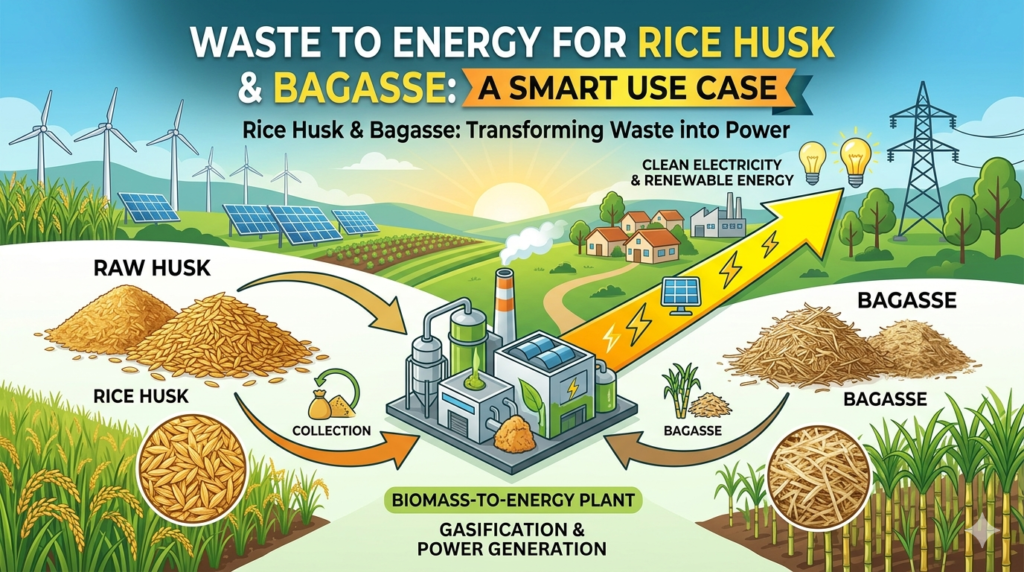
What is Waste to Energy for Rice Husk Bagasse?
Waste to energy for rice husk bagasse refers to the process of converting agricultural by-products into usable forms of energy such as electricity, heat, or biofuels.
- Rice Husk: Outer shell of rice grains, often discarded or burned
- Bagasse: Fibrous residue left after extracting juice from sugarcane
Both materials are rich in carbon and have high calorific value, making them ideal for energy generation through technologies like:
- Pyrolysis
- Gasification
- Combustion
These processes transform waste into valuable energy while minimizing landfill usage.
Why India Needs Waste to Energy Solutions for Agricultural Waste
India is one of the largest producers of rice and sugarcane globally. This leads to an enormous amount of agricultural waste every year.
Key Challenges:
- Open burning causes air pollution (especially in rural and semi-urban areas)
- Waste disposal is costly and inefficient
- Missed opportunity for energy generation
Key Opportunities:
- Reduce dependence on fossil fuels
- Generate decentralized energy in rural areas
- Support government sustainability goals
Adopting waste to energy for rice husk bagasse directly addresses these challenges while unlocking economic value.
Process: How Rice Husk and Bagasse Turn into Energy
Understanding the process helps businesses see the true potential of this solution.
1. Collection & Preparation
Agricultural waste is collected from farms or processing units and dried to reduce moisture content.
2. Conversion Technology
Depending on the setup, one of the following methods is used:
- Pyrolysis: Heating biomass in the absence of oxygen to produce bio-oil, syngas, and biochar
- Gasification: Converts biomass into syngas for electricity generation
- Direct Combustion: Burns biomass to produce steam and generate power
3. Energy Generation
The produced energy is used for:
- Industrial operations
- Electricity generation
- Heating systems
4. By-product Utilization
- Biochar can be used as fertilizer
- Ash can be used in construction materials
This circular model ensures zero waste.
Benefits of Waste to Energy for Rice Husk Bagasse
1. Environmental Benefits
- Reduces air pollution from open burning
- Lowers greenhouse gas emissions
- Promotes sustainable waste management
2. Economic Benefits
- Converts waste into revenue-generating energy
- Reduces energy costs for industries
- Creates new business opportunities
3. Energy Security
- Provides consistent, local energy supply
- Reduces reliance on coal and fossil fuels
4. Rural Development
- Creates jobs in waste collection and processing
- Supports local economies
Industrial Use Cases in India
The adoption of waste to energy for rice husk bagasse is rapidly growing across multiple sectors.
1. Rice Mills
Rice mills generate large volumes of husk daily. Instead of disposing of it, they use it for:
- Captive power generation
- Selling surplus electricity
2. Sugar Mills
Bagasse is already widely used in sugar mills for:
- Co-generation of electricity
- Steam production
3. Food Processing Units
Industries requiring continuous heat can use biomass energy for:
- Drying
- Processing
4. Textile & Manufacturing Units
Biomass energy reduces dependency on expensive electricity and diesel.
Government Support & Policies in India
The Indian government actively promotes biomass-based energy solutions.
Key Initiatives:
- Subsidies for biomass energy plants
- Support under renewable energy policies
- Incentives for reducing carbon emissions
These initiatives make investing in waste to energy for rice husk bagasse more attractive and financially viable.
Challenges You Should Consider
While the opportunity is strong, there are some practical challenges:
- Initial investment cost
- Technology selection and setup
- Consistent raw material supply
- Skilled manpower requirement
However, with the right technology partner, these challenges can be effectively managed.
Why Businesses Should Act Now
India is moving rapidly toward clean energy adoption. Businesses that invest early in waste to energy for rice husk bagasse will gain:
- Competitive advantage
- Cost savings in the long term
- Strong brand positioning as a sustainable business
Delaying adoption may result in higher compliance costs and missed opportunities.
Choosing the Right Waste to Energy Partner
Success in this sector depends heavily on execution.
Look for a Partner Who Offers:
- End-to-end project solutions
- Technology expertise (pyrolysis, gasification)
- Custom solutions based on your waste type
- Ongoing maintenance and support
A reliable partner ensures your project is efficient, scalable, and profitable.
Future of Waste to Energy in India
The future of waste to energy for rice husk bagasse is extremely promising.
With:
- Increasing energy demand
- Strict environmental regulations
- Rising awareness of sustainability
Biomass energy is set to become a mainstream energy source in India.
Industries that adopt this model early will lead the transition toward a cleaner and more efficient energy ecosystem.
Waste to energy for rice husk bagasse is not just a waste management solution it’s a powerful business opportunity. It transforms agricultural waste into a valuable energy resource while addressing environmental concerns and reducing operational costs.
For Indian industries, especially those dealing with agricultural by-products, this is the right time to shift toward sustainable energy solutions and unlock long-term growth.