In today’s rapidly evolving energy landscape, industries are actively searching for sustainable and cost-effective alternatives to traditional fuels. One of the most promising solutions is the best biomass pyrolysis technology, which converts agricultural and organic waste into valuable energy products like biochar, bio-oil, and syngas.
In India, where agricultural waste is abundant, adopting the best biomass pyrolysis technology is not just an environmental decision it’s a smart business move that reduces waste management costs while generating revenue.
What is Biomass Pyrolysis Technology?
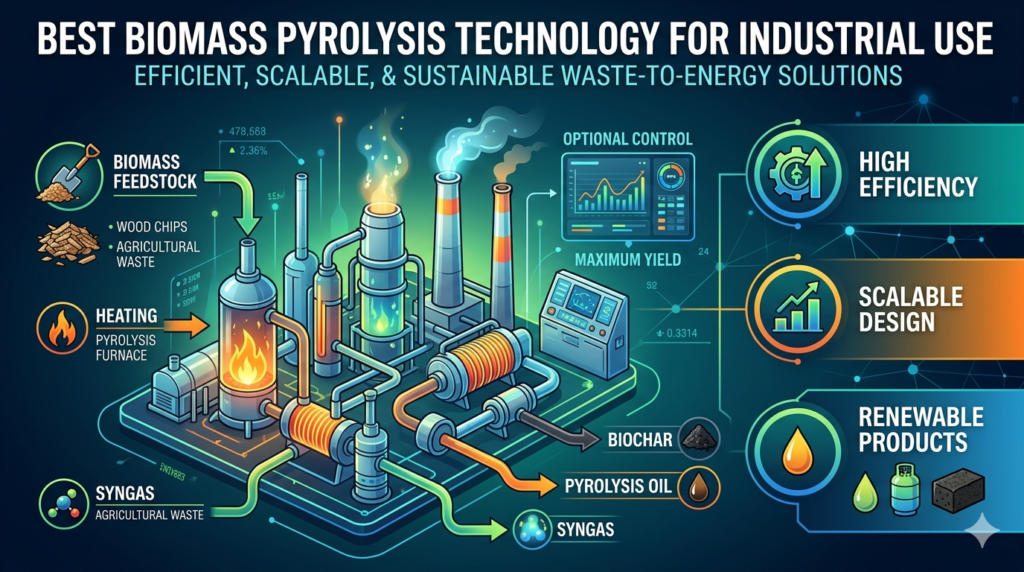
Biomass pyrolysis is a thermochemical process that decomposes organic materials such as crop residues, sawdust, and agro-waste at high temperatures in the absence of oxygen.
This process produces:
- Biochar – Used as soil enhancer and carbon sequestration material
- Bio-oil – Alternative fuel for industrial heating
- Syngas – Can be used for power generation
The efficiency and output quality depend heavily on selecting the best biomass pyrolysis technology suited for industrial-scale operations.
Why Industries in India Are Adopting the Best Biomass Pyrolysis Technology
India generates millions of tons of agricultural waste every year. Traditionally, this waste is burned, causing severe air pollution. Pyrolysis offers a cleaner and more profitable alternative.
Key Benefits:
- Waste to Wealth Conversion
- Reduced Carbon Emissions
- Energy Cost Savings
- Compliance with Environmental Regulations
- New Revenue Streams from By-products
For industries dealing with large volumes of biomass, investing in the best biomass pyrolysis technology ensures long-term operational efficiency.
Types of Biomass Pyrolysis Technologies
Understanding the different types is crucial when selecting the best biomass pyrolysis technology for industrial use.
1. Slow Pyrolysis
- Longer processing time
- High biochar yield
- Suitable for soil-focused applications
2. Fast Pyrolysis
- Rapid heating process
- Higher bio-oil production
- Ideal for fuel generation industries
3. Continuous Pyrolysis Systems
- Fully automated
- Suitable for large-scale industrial operations
- Consistent output quality
4. Batch Pyrolysis Systems
- Operates in cycles
- Lower initial investment
- Suitable for small to medium industries
For industrial applications in India, continuous pyrolysis systems are often considered the best biomass pyrolysis technology due to scalability and efficiency.
How to Choose the Best Biomass Pyrolysis Technology
Selecting the right system can directly impact profitability and efficiency. Here are the critical factors:
1. Feedstock Compatibility
Different technologies support different biomass types:
- Rice husk
- Sugarcane bagasse
- Coconut shells
- Sawdust
Ensure the system is optimized for your available raw material.
2. Production Capacity
Industrial units require high throughput systems. Choose technology that matches your daily waste generation.
3. Automation Level
The best biomass pyrolysis technology comes with:
- PLC-based controls
- Minimal manual intervention
- Real-time monitoring
This reduces operational costs and improves safety.
4. Energy Efficiency
Modern systems reuse syngas to power the process itself, significantly reducing fuel consumption.
5. Environmental Compliance
Ensure the system meets:
- CPCB (Central Pollution Control Board) norms
- Emission control standards
This is critical for long-term operations in India.
Applications of Biomass Pyrolysis in Industrial Sectors
The best biomass pyrolysis technology is being widely adopted across industries:
Agriculture Sector
- Biochar improves soil fertility
- Reduces chemical fertilizer dependency
Manufacturing Industry
- Bio-oil replaces furnace oil
- Reduces fuel costs
Power Generation
- Syngas used for electricity production
Waste Management Companies
- Converts large-scale waste into usable energy
Cost of Biomass Pyrolysis Technology in India
The investment varies based on capacity and automation:
Estimated Cost Range:
- Small-scale units: ₹10–25 lakhs
- Medium-scale plants: ₹25–75 lakhs
- Industrial-scale systems: ₹1 crore and above
While the initial investment may seem high, industries recover costs through:
- Fuel savings
- Sale of biochar and bio-oil
- Reduced waste disposal expenses
Choosing the best biomass pyrolysis technology ensures faster ROI.
Challenges in Implementing Pyrolysis Technology
Despite its advantages, industries may face:
- High initial investment
- Technical complexity
- Need for skilled operators
- Feedstock supply consistency
However, with the right technology partner, these challenges can be effectively managed.
Future of Biomass Pyrolysis Technology in India
India is moving towards renewable energy and circular economy models. Government initiatives supporting waste-to-energy projects are boosting adoption.
The demand for the best biomass pyrolysis technology is expected to grow significantly due to:
- Rising fuel costs
- Environmental regulations
- Increased awareness about sustainability
Industries that adopt early will gain a competitive advantage in both cost savings and brand positioning.
Why Investing in the Best Biomass Pyrolysis Technology is a Smart Business Move
If your business generates or handles biomass waste, ignoring this opportunity means losing potential revenue.
The right technology helps you:
- Turn waste into profit
- Reduce operational costs
- Build an eco-friendly brand image
- Stay ahead of regulations
Choosing the best biomass pyrolysis technology is no longer just an option it’s a necessity for industries aiming for sustainable growth in India.
With the right system, you can transform agricultural waste into valuable energy resources while reducing environmental impact and increasing profitability.
Call to Action
Looking to implement the best biomass pyrolysis technology for your industrial operations?
Get in touch with our experts today to:
- Analyze your biomass potential
- Recommend the right technology
- Calculate ROI for your business
Turn your waste into energy and profit.