India is generating massive amounts of agricultural residue, forestry waste, and industrial biomass every year. For businesses, municipalities, and waste-to-energy investors, the question is no longer whether biomass can be used for energy, but which conversion method delivers better results. Fast pyrolysis technology has emerged as a modern solution that offers higher efficiency, faster conversion, and better value recovery compared to many traditional biomass methods.
If you are evaluating biomass-to-energy solutions in India, understanding the difference between fast pyrolysis and conventional biomass processing methods is essential. This guide explains the practical differences, performance advantages, and business relevance of both approaches.
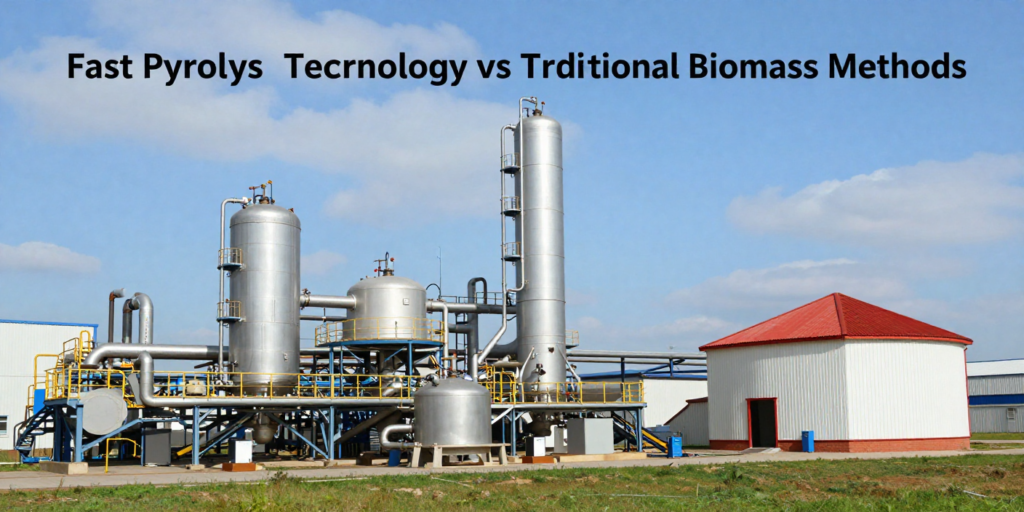
What Is Fast Pyrolysis Technology?
Fast pyrolysis technology is a thermochemical process that rapidly heats biomass in the absence of oxygen to produce liquid bio-oil, syngas, and char. Unlike slow or conventional thermal treatment methods, fast pyrolysis is designed to maximize liquid fuel output in a very short reaction time.
This technology works best with dry, finely prepared biomass feedstock such as:
- Agricultural residue
- Sawdust
- Wood chips
- Bagasse
- Coconut shells
- Biomass processing waste
In India, where biomass availability is high, fast pyrolysis offers a practical route for converting underutilized organic material into usable energy products.
Fast Pyrolysis Technology vs Traditional Biomass Methods
To make the right energy investment, businesses need to compare fast pyrolysis technology with traditional biomass methods such as direct combustion, slow pyrolysis, and basic gasification-based approaches.
1. Conversion Speed
The biggest difference is in the name itself. Fast pyrolysis heats biomass very quickly, often within seconds, in an oxygen-free environment. Traditional biomass methods usually involve slower heating or direct burning.
- Fast pyrolysis technology: Rapid thermal decomposition
- Traditional biomass methods: Slower conversion or direct combustion
This fast processing improves output control and makes the system more suitable for continuous industrial operations.
2. Main Output
The primary output of fast pyrolysis is bio-oil, which can be stored, transported, and used for energy-related applications. Traditional biomass methods, especially direct combustion, mainly produce heat.
- Fast pyrolysis technology: Bio-oil, syngas, and char
- Traditional biomass methods: Heat, ash, flue gases, and limited by-products
For businesses looking beyond heat generation, fast pyrolysis creates more commercial possibilities.
3. Energy Efficiency and Value Recovery
Traditional biomass combustion is useful for direct heating, but it may not maximize the full value of the biomass. Fast pyrolysis is designed to recover energy in multiple usable forms.
This means fast pyrolysis technology can provide:
- Liquid fuel potential
- Internal energy recovery through syngas
- Carbon-rich char as a by-product
That makes it better suited for resource recovery and circular economy goals.
4. Environmental Performance
Open burning and older biomass combustion systems can contribute to air pollution if not managed properly. Fast pyrolysis operates in a controlled, oxygen-free reactor, which allows better emissions management when integrated with proper pollution control systems.
In India, where sustainability and emission control are becoming more important, fast pyrolysis technology offers a cleaner and more advanced pathway compared to outdated biomass burning practices.
5. Feedstock Handling
Traditional biomass methods can sometimes accept rough biomass, but they may suffer from inconsistent performance. Fast pyrolysis requires more feedstock preparation, such as drying and size reduction, but this improves process efficiency and output consistency.
This means the system may need better preprocessing, but the returns in conversion quality are often higher.
6. Industrial Scalability
Direct combustion systems are widely used, especially in boilers and thermal applications. However, fast pyrolysis is gaining attention for projects where biomass needs to be converted into higher-value fuel products.
For Indian industries focused on renewable fuel, waste reduction, and alternative energy generation, fast pyrolysis technology is increasingly relevant for scalable commercial deployment.
7. Economic Potential
Traditional biomass methods are often chosen for low-cost heat production. Fast pyrolysis may involve a higher initial setup cost, but it can create greater long-term value through multiple outputs and better resource efficiency.
This makes it attractive for:
- Waste-to-energy companies
- Biomass processing plants
- Industrial fuel replacement projects
- Large-scale agricultural residue management systems
Why Fast Pyrolysis Technology Matters in India
India has a unique biomass opportunity. Large volumes of agricultural residue are generated across states every year, and improper disposal methods such as stubble burning continue to create environmental problems. At the same time, industries are searching for alternative energy solutions that reduce fuel costs and improve sustainability performance.
This is where fast pyrolysis technology becomes especially important.
Supports Agricultural Waste Management
Farm and agro-processing waste can be converted into valuable energy products instead of being burned or dumped.
Reduces Dependence on Traditional Fuels
Bio-oil and syngas generated through fast pyrolysis can contribute to alternative fuel strategies in industrial operations.
Enables Better Resource Utilization
Rather than treating biomass as low-value residue, fast pyrolysis transforms it into commercially useful outputs.
Aligns with Sustainable Development Goals
India’s push toward cleaner technologies, renewable energy, and efficient waste management creates strong relevance for modern biomass conversion solutions.
Benefits of Fast Pyrolysis Technology
Businesses searching for modern biomass solutions often want direct benefits. Here are the main reasons fast pyrolysis technology stands out:
5 Benefits of Fast Pyrolysis Technology for Biomass Conversion
1. Higher Bio-Oil Yield
Fast pyrolysis is specifically designed to maximize liquid output from biomass, making it different from methods that mainly generate heat.
2. Faster Processing
The rapid conversion cycle supports continuous operations and improves industrial productivity.
3. Better Product Diversification
The process creates more than one useful output, including oil, gas, and char.
4. Cleaner Controlled Process
Compared to uncontrolled biomass burning, the process is more advanced and more manageable from an emissions perspective.
5. Stronger Commercial Value
Businesses can explore fuel recovery, energy savings, and by-product monetization through a single conversion system.
Limitations to Consider
A trustworthy blog should also explain where fast pyrolysis may not be the easiest option.
Requires Feedstock Preparation
Wet or mixed biomass can reduce system efficiency. Proper drying and sizing are essential.
Higher Initial Investment
Compared to basic combustion systems, setup and process control may require more capital.
Technical Expertise Matters
Efficient operation depends on reactor design, feedstock consistency, and output handling.
These are not deal-breakers, but they are important for businesses evaluating project feasibility.
Which Biomass Method Is Better?
The answer depends on the business objective.
- If the goal is only simple heat generation, traditional biomass combustion may still be useful.
- If the goal is to recover higher-value products, improve biomass utilization, and support long-term energy strategy, fast pyrolysis technology is the stronger option.
For India’s evolving waste-to-energy and biomass-to-fuel market, fast pyrolysis is better aligned with modern industrial needs.
Fast pyrolysis technology is changing how biomass is converted into energy and valuable by-products. Compared to traditional biomass methods, it offers faster processing, higher-value output, improved resource recovery, and stronger long-term commercial potential.
In India, where agricultural residue, industrial biomass waste, and sustainability challenges are all growing, fast pyrolysis provides a forward-looking solution for businesses and project developers. While traditional biomass methods still have their place, fast pyrolysis is increasingly becoming the smarter choice for organizations that want better efficiency, cleaner conversion, and stronger value from biomass resources.
For companies planning waste-to-energy or biomass utilization projects, investing in the right conversion technology can directly impact profitability, sustainability, and future scalability.