India produces massive amounts of agricultural residue every year, from rice husk and sugarcane bagasse to straw, corn stalks, and other crop waste. Much of this biomass is either underutilized or openly burned, causing pollution, waste of resources, and environmental damage. This is where biomass energy India is becoming an important solution. It helps convert agricultural waste into useful fuel and power, supporting cleaner energy generation, better waste management, and stronger rural economies.
For industries, agro-processing units, municipalities, and sustainability-focused businesses, biomass energy offers a practical way to turn low-value waste into a renewable resource. In this blog, we explain how biomass energy works, why it matters in India, and how agricultural waste can be transformed into fuel for long-term economic and environmental value.
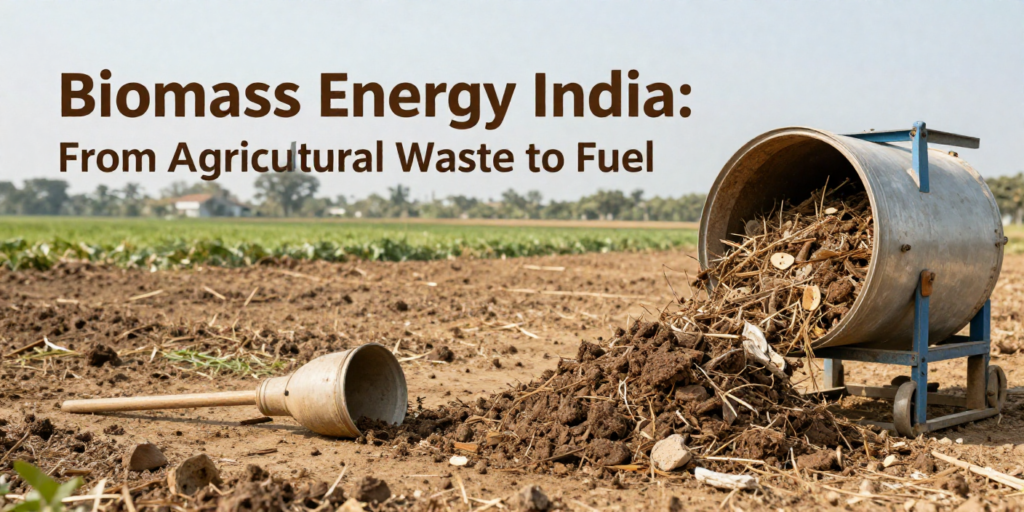
What Is Biomass Energy?
Biomass energy is energy produced from organic materials such as plant residue, agricultural waste, forestry by-products, animal waste, and biodegradable industrial waste. These materials contain stored solar energy absorbed by plants during growth. When processed correctly, biomass can be converted into heat, electricity, gas, or liquid fuel.
In the Indian context, agricultural biomass is one of the most important renewable energy resources because of the country’s large farming sector. Crop waste that would otherwise be discarded can be used as feedstock for energy generation.
Common biomass materials in India include:
- Rice husk
- Wheat straw
- Sugarcane bagasse
- Cotton stalk
- Groundnut shells
- Corn cobs
- Coconut shells
- Sawdust and wood chips
These materials can be processed through different biomass conversion technologies depending on the desired energy output.
Why Biomass Energy Matters in India
The demand for renewable energy in India is growing quickly. At the same time, the country is dealing with major agricultural waste management challenges. In many regions, crop residue is burned in open fields, creating severe air pollution and loss of potentially valuable energy resources.
This is why biomass energy India is more than just a renewable energy topic. It is directly linked to rural development, industrial fuel alternatives, waste reduction, and sustainable growth.
Key reasons biomass energy matters in India include:
- High availability of agricultural residue
- Need for cleaner alternatives to fossil fuels
- Rising concern over stubble burning and air pollution
- Opportunity to generate energy closer to rural and industrial demand centers
- Strong potential for circular economy and waste-to-value models
India has the raw material base to make biomass energy a practical part of its long-term energy transition.
How Agricultural Waste Becomes Fuel
To understand biomass energy India, it is important to see how agricultural waste is converted into useful fuel or energy. The process can vary depending on the technology used, but the core idea remains the same: biomass is collected, processed, and transformed into an energy product.
Biomass Energy India: How Agricultural Waste Turns Into Fuel
1. Collection of Agricultural Waste
The first step is collecting biomass from farms, agro-industries, or processing facilities. This may include straw, husk, stalks, shells, and other residue. Proper collection systems are essential for efficient biomass utilization.
2. Drying and Pre-Processing
Biomass often contains moisture, which can affect energy efficiency. Drying improves fuel quality. In many cases, the material is also chopped, crushed, or compacted to make it easier to transport and process.
3. Conversion Into Usable Fuel
Agricultural waste can be converted using different technologies such as:
Direct Combustion
Biomass is burned to produce heat or steam, which can then be used for industrial heating or electricity generation.
Gasification
Biomass is converted into producer gas or syngas through partial oxidation at high temperatures. This gas can be used for thermal applications or power generation.
Pyrolysis
Biomass is heated without oxygen to produce bio-oil, syngas, and biochar.
Pelletization and Briquetting
Loose agricultural residue is compressed into pellets or briquettes, which are easier to store, transport, and use as solid fuel.
Anaerobic Digestion
Certain biodegradable biomass can be processed to generate biogas through microbial action in oxygen-free conditions.
4. Fuel Use or Energy Generation
The final output may be used as:
- Boiler fuel
- Industrial heating fuel
- Electricity generation source
- Cooking or thermal energy fuel
- Input for waste-to-energy systems
This is how agricultural residue moves from being a disposal problem to becoming a valuable energy asset.
Types of Biomass Fuel Commonly Used in India
India has a diverse biomass base, which makes it suitable for different fuel forms. Some of the most commonly used biomass fuels include:
Biomass Briquettes
Briquettes are compressed blocks made from agricultural waste. They are widely used in industrial boilers as an alternative to coal or firewood.
Biomass Pellets
Pellets are smaller and denser than briquettes, offering better handling and more efficient combustion in some systems.
Biogas
Biogas is produced from animal waste, food waste, or other biodegradable organic matter. It is commonly used in rural energy systems and small-scale industrial applications.
Bio-oil and Syngas
Produced through advanced conversion methods like pyrolysis and gasification, these fuels are increasingly being explored for industrial use.
Benefits of Biomass Energy in India
There are several reasons why biomass energy India has strong commercial and environmental potential.
1. Reduces Agricultural Waste
Biomass energy gives value to residue that is often burned or dumped. This reduces waste and promotes better farm-level resource management.
2. Helps Control Air Pollution
Open burning of crop residue is a major contributor to air pollution. Using biomass for energy can help reduce this problem.
3. Provides Renewable Fuel Alternatives
Biomass can replace or reduce the use of coal, diesel, and other fossil fuels in certain applications.
4. Supports Rural Income Opportunities
Farmers, aggregators, and local supply chains can benefit economically from selling agricultural residue.
5. Encourages Decentralized Energy Production
Biomass energy projects can be developed close to the source of raw material, reducing transport costs and supporting local energy systems.
6. Strengthens Sustainable Business Operations
Industries that adopt biomass-based fuel systems can improve sustainability performance and reduce dependency on conventional fuels.
Industries That Can Benefit From Biomass Energy
Biomass energy is useful across multiple sectors in India. It is especially relevant for:
- Agro-processing units
- Food manufacturing industries
- Textile processing units
- Paper mills
- Dairy plants
- Rice mills
- Sugar factories
- Municipal waste-to-energy projects
- Rural energy enterprises
Any business that generates organic waste or uses high amounts of thermal energy can evaluate biomass as a practical alternative.
Challenges in Biomass Energy Adoption
Although the opportunity is strong, biomass energy systems also come with operational and commercial challenges.
Feedstock Supply Can Be Seasonal
Agricultural waste availability often depends on crop cycles, which can affect consistency of supply.
Storage and Logistics Matter
Biomass is bulky and may be expensive to transport if collection systems are not optimized.
Moisture and Quality Control Affect Performance
Poor-quality biomass can reduce combustion efficiency and system performance.
Technology Selection Is Critical
Not every biomass system suits every waste type. The right conversion technology must match the feedstock and end-use requirement.
Investment and Maintenance Need Planning
Businesses need proper feasibility studies, equipment selection, and maintenance planning to make biomass projects sustainable.
The Future of Biomass Energy in India
The future of biomass energy India looks promising because it aligns with multiple national priorities: renewable energy growth, pollution control, circular economy development, and rural livelihood enhancement. As industries seek cleaner fuel options and policymakers continue focusing on sustainable energy, biomass is likely to play a larger role in India’s energy mix.
For businesses, biomass energy is not just an environmental solution. It is also a strategic decision that can lower fuel costs, improve waste utilization, and strengthen ESG positioning. With the right supply chain and technology, agricultural waste can become a reliable source of long-term value.
India has one of the strongest biomass resource bases in the world, especially in the form of agricultural residue. Instead of treating crop waste as a disposal problem, businesses and industries can use it as a renewable fuel source. That is why biomass energy India is becoming a key part of sustainable waste-to-energy and industrial fuel strategies.
From briquettes and pellets to gasification and pyrolysis, biomass energy offers multiple pathways for converting agricultural waste into useful fuel. For Indian industries, farmers, and energy developers, this creates an opportunity to reduce pollution, improve waste management, and generate meaningful economic value.
Businesses that invest in biomass-based systems today can position themselves for a cleaner, smarter, and more sustainable future.