India’s industrial sector is growing rapidly, but so is its energy demand and environmental impact. Rising electricity costs, stricter regulations, and sustainability goals are pushing businesses to rethink how they consume energy. This is where eco-friendly energy technology becomes a strategic advantage not just an environmental choice.
If you are a manufacturer, plant owner, or industrial decision-maker searching for eco-friendly energy technology, this guide explains practical, scalable solutions that reduce operational costs while improving sustainability performance.
Why Eco-Friendly Energy Technology Matters for Indian Industries
Industries in India face three major challenges today:
- Increasing energy costs
- Environmental compliance pressure
- Need for sustainable brand positioning
Adopting eco-friendly energy technology helps solve all three.
Instead of relying entirely on traditional fossil fuels, industries can now integrate cleaner, smarter, and more efficient energy systems. This shift is not just about reducing emissions it directly impacts profitability, efficiency, and long-term growth.
7 Eco-Friendly Energy Technology Solutions for Industrial Applications
1. Solar Energy Systems for Industrial Use
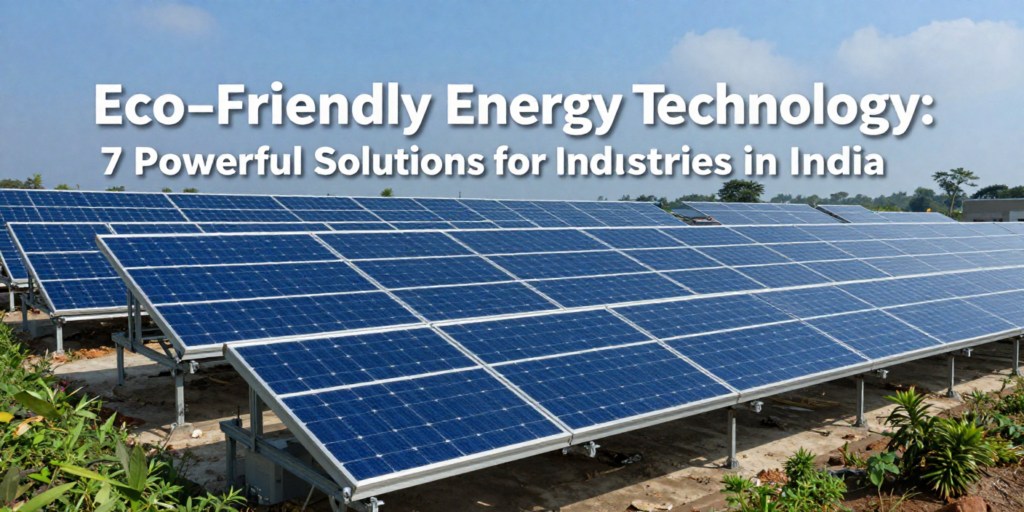
Solar power is one of the most widely adopted eco-friendly solutions in India.
Industries can install rooftop or ground-mounted solar systems to generate electricity for daily operations. With government incentives and falling installation costs, solar is now a financially viable option.
Key Benefits:
- Reduces electricity bills
- Low maintenance
- Long-term ROI
- Supports green certifications
2. Waste-to-Energy Technologies
Industrial waste is no longer just a disposal problem it is an energy opportunity.
Technologies like pyrolysis and biomass conversion allow industries to convert waste into usable energy. This is a critical application of eco-friendly energy technology in India, especially for sectors generating plastic, rubber, or organic waste.
Key Benefits:
- Reduces waste disposal costs
- Generates fuel or electricity
- Supports circular economy
How Eco-Friendly Energy Technology Improves Industrial Efficiency
Understanding how eco-friendly energy technology works in real world operations helps businesses make better investment decisions.
These technologies are designed to:
- Optimize energy consumption
- Recover unused energy
- Reduce dependency on grid power
- Improve overall system efficiency
The result is not just environmental improvement but measurable cost savings and operational control.
3. Biomass Energy Systems
Biomass systems convert agricultural waste, wood chips, or organic material into energy.
In India, where agricultural residue is abundant, this solution is both practical and scalable.
Key Benefits:
- Utilizes locally available resources
- Reduces reliance on fossil fuels
- Cost-effective for rural and semi-urban industries
4. Energy-Efficient Machinery and Automation
Sometimes the most impactful eco-friendly investment is not energy generation but energy optimization.
Upgrading to energy-efficient machinery and smart automation systems reduces energy wastage significantly.
Key Benefits:
- Lower energy consumption
- Increased productivity
- Reduced operational downtime
5. Heat Recovery Systems
Industries often waste large amounts of heat during operations. Heat recovery systems capture and reuse this energy.
This is one of the most underutilized eco-friendly energy technology solutions in Indian manufacturing.
Key Benefits:
- Improves energy efficiency
- Reduces fuel consumption
- Enhances process performance
6. Wind Energy for Industrial Applications
Wind energy is another renewable solution suitable for industries located in high-wind regions.
Though location-dependent, it can significantly reduce grid dependency.
Key Benefits:
- Clean and renewable
- Reduces long-term energy costs
- Ideal for large-scale industries
7. Hybrid Energy Systems
Hybrid systems combine multiple technologies such as solar + biomass or solar + battery storage.
This approach ensures consistent energy supply while maximizing efficiency.
Key Benefits:
- Reliable energy output
- Better energy management
- Reduced risk of power interruptions
Key Benefits of Eco-Friendly Energy Technology for Businesses
Adopting eco-friendly energy technology is not just about sustainability it’s a business decision.
Cost Savings
Lower electricity bills and reduced fuel consumption directly improve margins.
Regulatory Compliance
Helps meet environmental norms set by Indian authorities.
Brand Positioning
Customers and partners increasingly prefer environmentally responsible businesses.
Energy Independence
Reduces dependency on fluctuating grid supply and fuel prices.
Challenges Industries Should Consider
While the benefits are strong, industries should evaluate:
- Initial investment costs
- Technology selection based on waste type or energy needs
- Space requirements
- Regulatory approvals
A proper feasibility study ensures maximum ROI from eco-friendly energy investments.
The Future of Eco-Friendly Energy Technology in India
India is moving towards cleaner and smarter energy systems. Government policies, ESG goals, and rising energy costs are accelerating adoption.
In the coming years, eco-friendly energy technology will become a standard requirement rather than a competitive advantage.
Industries that adopt early will benefit from:
- Lower operational costs
- Better compliance readiness
- Stronger market positioning
Eco-friendly energy technology is no longer optional for industries in India it is a strategic necessity. From solar power and waste to energy systems to heat recovery and hybrid solutions, businesses now have multiple ways to reduce costs while improving sustainability.
The key is to choose the right combination of technologies based on your industry, waste generation, and energy requirements.
If implemented correctly, eco-friendly energy solutions can transform waste into value, reduce operational expenses, and position your business as a future-ready enterprise.