India is rapidly shifting towards sustainable waste management and alternative energy solutions. In this transition, waste to energy project developers play a critical role in turning waste into valuable energy assets. From planning and technology selection to execution and compliance, these developers are the backbone of successful waste-to-energy projects.
If you are a business, municipality, or investor exploring waste-to-energy opportunities, understanding the role of waste to energy project developers can help you make the right strategic and financial decisions.
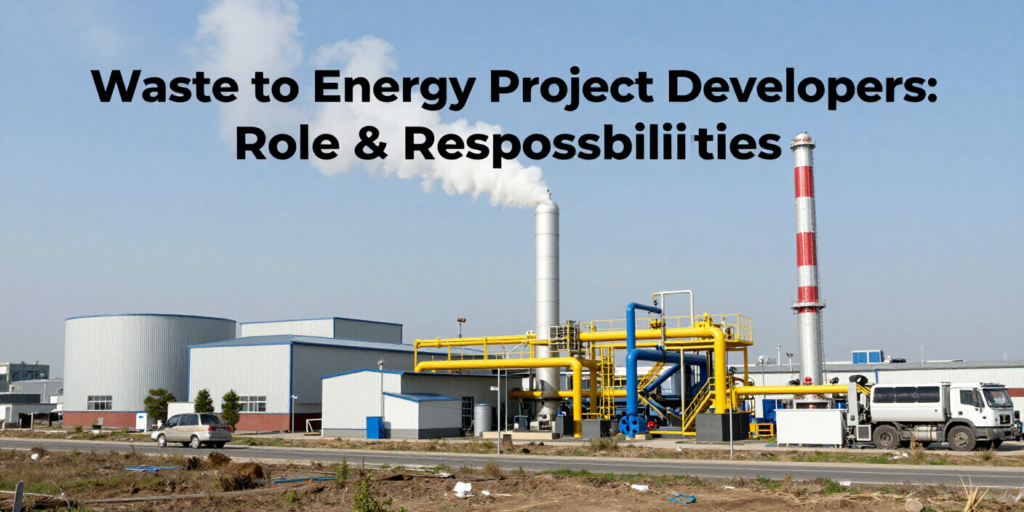
What Are Waste to Energy Project Developers?
Waste to energy project developers are specialized companies or experts responsible for designing, building, and managing projects that convert waste into usable energy. These projects may involve technologies such as:
- Pyrolysis systems
- Biomass conversion
- Refuse-derived fuel (RDF) plants
- Biogas and anaerobic digestion
Their primary goal is to create a system where waste is efficiently processed and converted into electricity, fuel, or heat while ensuring environmental compliance and profitability.
Waste to Energy Project Developers and Their Core Responsibilities
Waste to Energy Project Developers Roles in Project Execution
1. Feasibility Study & Project Planning
Developers begin by assessing the technical and financial viability of the project. This includes:
- Waste availability analysis
- Site selection
- Technology feasibility
- Cost estimation and ROI projection
A strong feasibility study ensures long-term project success.
2. Technology Selection
Choosing the right technology is critical. Waste to energy project developers evaluate:
- Type of waste (plastic, biomass, MSW)
- Moisture content and composition
- Output requirements (fuel, power, gas)
Incorrect technology selection can lead to operational failure and financial loss.
3. Project Design & Engineering
Developers handle complete system design, including:
- Plant layout
- Reactor design
- Material handling systems
- Emission control systems
Engineering precision ensures operational efficiency and regulatory compliance.
4. Regulatory Approvals & Compliance
In India, waste-to-energy projects require approvals from multiple authorities. Developers manage:
- Pollution control board approvals
- Environmental clearances
- Safety and compliance certifications
This reduces legal risks for investors and businesses.
5. Procurement & Installation
Developers oversee sourcing of equipment and plant setup, including:
- Vendor selection
- Machinery procurement
- Installation and commissioning
A reliable developer ensures quality equipment and timely execution.
6. Operations & Maintenance (O&M)
Many developers provide ongoing support after installation:
- Plant operation management
- Performance monitoring
- Maintenance and troubleshooting
Efficient O&M directly impacts ROI and system lifespan.
7. Revenue Strategy & Market Linkage
A key responsibility is ensuring that the outputs generate revenue. This includes:
- Identifying buyers for fuel or energy
- Creating supply contracts
- Optimizing output utilization
This is where waste to energy project developers add maximum business value.
Why Waste to Energy Project Developers Are Important in India
India generates millions of tonnes of waste annually, creating both a challenge and an opportunity. Professional developers are essential because:
Complex Project Execution
Waste-to-energy projects involve multiple technical, financial, and regulatory layers.
High Investment Risk
Without expert planning, projects can fail or underperform.
Need for Compliance
Strict environmental norms require professional handling.
Demand for Scalable Solutions
Industries and municipalities need solutions that are efficient and scalable.
Key Benefits of Hiring Waste to Energy Project Developers
End-to-End Project Management
From concept to commissioning, everything is handled by experts.
Faster Execution
Experienced developers reduce delays and streamline processes.
Better ROI
Optimized design and operations improve profitability.
Risk Reduction
Compliance and technical expertise minimize project risks.
Access to Technology
Developers bring proven and tested technologies to the table.
How to Choose the Right Waste to Energy Project Developers
Selecting the right partner is critical for success. Here’s what to evaluate:
Industry Experience
Look for developers with proven projects in India.
Technology Expertise
Ensure they specialize in the technology suited to your waste type.
Compliance Knowledge
They should have experience with Indian regulatory frameworks.
After-Sales Support
Strong O&M support is essential for long-term performance.
ROI Transparency
A reliable developer provides clear financial projections.
Challenges in Waste-to-Energy Projects
To build trust and authority, it’s important to highlight real-world challenges:
Feedstock Variability
Inconsistent waste quality can affect output.
High Initial Investment
Capital cost can be significant depending on scale.
Market Dependency
Revenue depends on demand for fuel or energy outputs.
Operational Complexity
Requires skilled manpower and monitoring.
This is why experienced waste to energy project developers are essential.
Future of Waste to Energy in India
The future of waste-to-energy in India is strong due to:
- Government initiatives for clean energy
- Increasing waste generation
- Rising fuel costs
- Growing focus on sustainability
As adoption increases, the demand for professional waste to energy project developers will continue to grow across industries and municipalities.
Waste to energy project developers are the driving force behind successful waste-to-energy initiatives in India. Their role goes far beyond installation they ensure that projects are technically sound, financially viable, and compliant with regulations.
For businesses and investors, choosing the right developer can mean the difference between a high-performing asset and a failed project. With the right expertise, waste can be transformed into a profitable and sustainable opportunity.