India is facing a massive waste management challenge, with increasing volumes of municipal, industrial, and agricultural waste. Businesses and government bodies are actively looking for sustainable solutions, and this is where waste to energy companies in India play a crucial role. These companies help convert waste into usable energy, reduce landfill dependency, and create long-term environmental and economic value.
If you’re planning to invest in waste-to-energy solutions or partner with a technology provider, choosing the right company is a critical decision that directly impacts your ROI, compliance, and operational success.
This guide will help you understand how to evaluate and select the best partner in India.
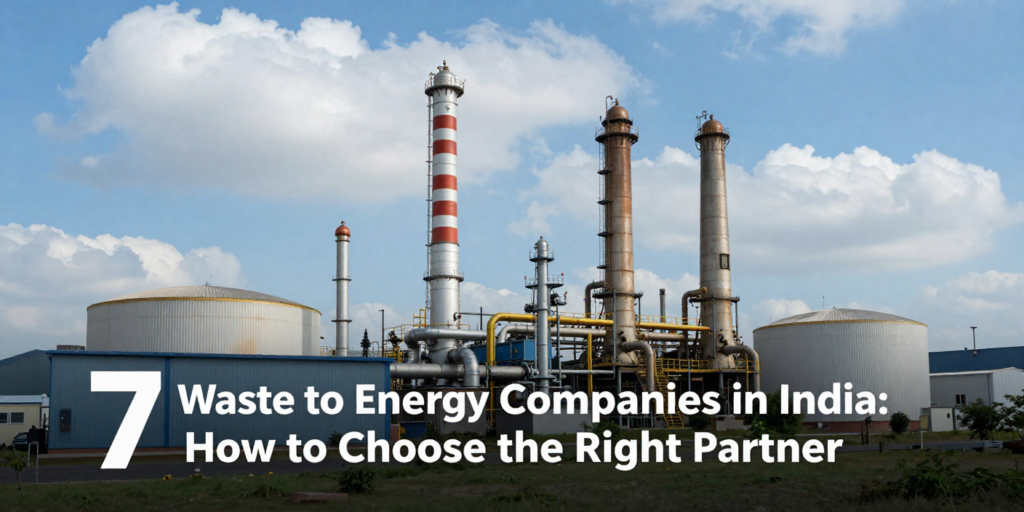
What Do Waste to Energy Companies in India Do?
Waste-to-energy (WTE) companies provide technologies and systems that convert waste materials into energy forms such as electricity, fuel, or heat. Their services typically include:
- Waste assessment and feasibility studies
- Technology selection (pyrolysis, gasification, incineration, biogas)
- Plant design and installation
- Operation and maintenance support
- Regulatory compliance and environmental approvals
For Indian industries, municipalities, and large scale waste generators, these companies offer an end-to-end solution for managing waste while generating value.
7 Factors to Choose the Right Waste to Energy Partner
Selecting from the many waste to energy companies in India requires a strategic approach. Here are the key factors to consider:
1. Technology Expertise and Specialization
Not all companies use the same technology. Some specialize in:
- Pyrolysis (plastic, tyre, biomass)
- Biogas (organic waste)
- Incineration (municipal solid waste)
- Gasification (industrial waste)
Choose a partner whose expertise matches your waste type. For example, pyrolysis is ideal for plastic and tyre waste, while biogas suits organic waste streams.
2. Proven Track Record and Case Studies
Always evaluate:
- Completed projects
- Industry experience
- Client testimonials
- Operational plants
A reliable company should be able to demonstrate real-world success, especially in Indian conditions where waste composition varies significantly.
3. Compliance with Indian Regulations
Waste-to-energy projects must comply with:
- Pollution control norms
- Environmental clearances
- State and central government policies
Ensure the company understands guidelines from bodies like CPCB and state pollution control boards. Non-compliance can lead to project shutdowns and financial losses.
4. Customization and Scalability
Every business has different waste generation patterns. The right partner will:
- Offer customized solutions
- Design scalable systems
- Adapt technology based on your growth
Avoid companies offering one-size-fits-all solutions.
5. ROI and Commercial Viability
A strong partner will clearly explain:
- Capital investment
- Operating costs
- Payback period
- Revenue from energy output
The best waste to energy companies in India focus not just on sustainability but also on profitability.
6. After-Sales Support and Maintenance
Waste-to-energy plants require ongoing monitoring and maintenance. Check whether the company provides:
- AMC (Annual Maintenance Contracts)
- Technical support
- Training for staff
- Remote monitoring systems
Lack of support can lead to operational inefficiencies.
7. End-to-End Project Capability
The ideal company should handle:
- Consultation
- Design
- Installation
- Commissioning
- Operations
Working with a single partner ensures accountability and smoother execution.
Why Businesses in India Are Investing in Waste to Energy
The demand for waste to energy companies in India is growing rapidly due to several key factors:
Rising Waste Generation
India generates millions of tons of waste daily, creating urgency for efficient disposal systems.
Strict Environmental Regulations
Government policies are pushing industries toward sustainable waste management practices.
Energy Cost Optimization
Waste-to-energy solutions help businesses reduce dependence on conventional fuels.
Sustainability and ESG Goals
Companies are focusing on sustainability to improve brand image and meet ESG standards.
Common Mistakes to Avoid When Choosing a WTE Company
Many businesses make costly mistakes while selecting partners. Avoid these:
- Choosing based only on low cost
- Ignoring technology suitability
- Not verifying past projects
- Overlooking compliance requirements
- Underestimating maintenance needs
A wrong decision can lead to operational failure and financial loss.
Future of Waste to Energy in India
The future of waste to energy companies in India looks promising. With government initiatives like:
- Swachh Bharat Mission
- Smart Cities Mission
- Renewable energy targets
the demand for advanced waste-to-energy technologies is expected to grow significantly.
Private sector participation, innovation in pyrolysis and gasification, and increasing awareness will further accelerate adoption.
Choosing the right partner among the many waste to energy companies in India is not just a technical decision it’s a strategic investment. The right company will help you convert waste into value, reduce environmental impact, and improve long-term profitability.
Focus on technology, experience, compliance, and support when making your decision. Businesses that invest in the right waste-to-energy solutions today will gain a competitive advantage in sustainability and operational efficiency tomorrow.