Introduction
India is facing a growing waste management crisis, generating over 150,000 tonnes of solid waste every day. At the same time, the country is actively searching for sustainable energy alternatives. This is where waste to energy technology plays a transformative role.
In the first 100 words itself, it’s clear that waste to energy technology is not just a trend it’s becoming a necessity for India’s future. By converting waste into electricity, heat, or fuel, this technology offers a dual benefit: solving waste problems and generating clean energy.
But what does the future hold for this sector in India? Let’s explore.
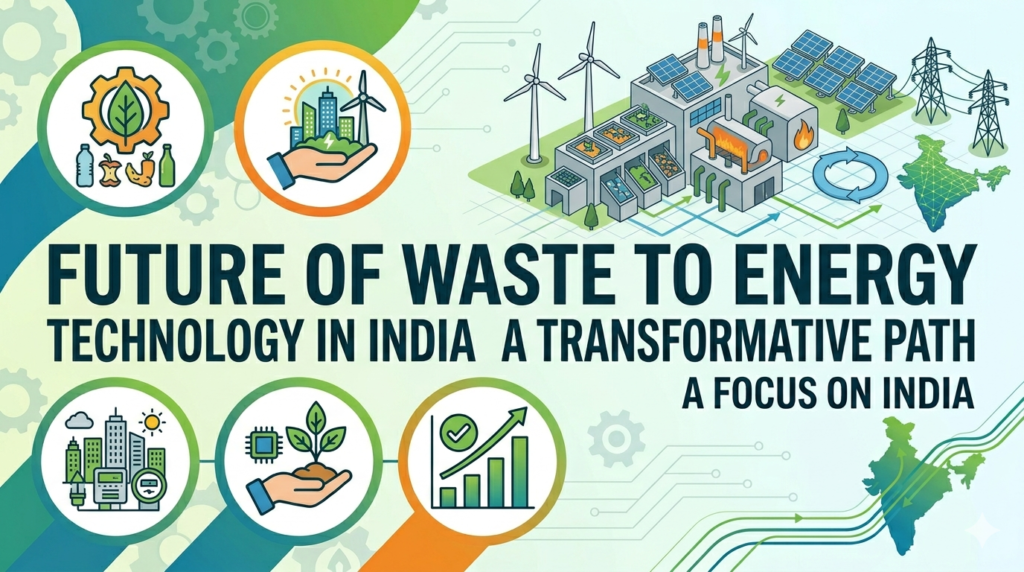
What is Waste to Energy Technology?
Waste to energy technology refers to processes that convert non-recyclable waste materials into usable forms of energy. These include:
- Electricity
- Heat
- Biofuels
- Synthetic gas (syngas)
Common methods used in India include:
- Incineration
- Pyrolysis
- Gasification
- Anaerobic digestion
Among these, pyrolysis and gasification are gaining rapid traction due to their efficiency and lower emissions.
Current Status of Waste to Energy in India
India has already begun adopting waste to energy solutions in major cities like:
- Delhi
- Mumbai
- Hyderabad
- Pune
Government initiatives such as:
- Swachh Bharat Mission
- Smart Cities Mission
have accelerated investments in this sector.
However, challenges remain:
- Poor waste segregation
- High capital investment
- Lack of awareness among industries
Despite this, the demand for sustainable solutions continues to rise.
Future of Waste to Energy Technology in India
1. Rapid Urbanization Will Drive Demand
With India’s urban population expected to grow significantly, waste generation will increase exponentially. This creates a massive opportunity for waste to energy technology to become a primary waste management solution.
Cities will increasingly rely on decentralized waste processing units, especially for industrial and agricultural waste.
2. Rise of Advanced Technologies
The future will see a shift toward more advanced and efficient technologies such as:
- Plasma gasification
- AI-powered waste sorting
- Automated processing plants
These innovations will improve energy output while reducing environmental impact.
3. Strong Government Support and Policies
The Indian government is expected to introduce:
- Subsidies for waste to energy projects
- Public-private partnership (PPP) models
- Stricter waste disposal regulations
Policies promoting renewable energy will further boost adoption of waste to energy technology.
4. Industrial Adoption Will Increase
Industries such as:
- Manufacturing
- Agriculture
- Food processing
are increasingly adopting waste to energy solutions to:
- Reduce disposal costs
- Generate additional revenue
- Meet sustainability goals
This shift will make waste management a profit-generating activity rather than a cost burden.
5. Growth in Agricultural Waste Utilization
India produces massive amounts of agricultural waste like:
- Crop residue
- Husk
- Biomass
Instead of burning (which causes pollution), this waste can be converted into energy using waste to energy technology.
This will significantly reduce air pollution and create rural energy solutions.
6. Investment and Startup Ecosystem Expansion
The waste to energy sector is attracting:
- Venture capital
- Government funding
- International investors
Startups are emerging with innovative solutions, especially in:
- Plastic waste conversion
- Biomass energy
- Smart waste tracking
This ecosystem will drive innovation and scalability.
Benefits of Waste to Energy Technology
1. Reduces Landfill Dependency
Waste volume is significantly reduced, saving land and preventing pollution.
2. Generates Clean Energy
It contributes to India’s renewable energy targets.
3. Supports Circular Economy
Waste is reused as a resource, promoting sustainability.
4. Creates Business Opportunities
From plant setup to maintenance, it opens new revenue streams.
Challenges That Need to Be Addressed
Despite its potential, the sector faces key challenges:
1. Waste Segregation Issues
Mixed waste reduces efficiency and increases processing costs.
2. High Initial Investment
Setting up plants requires significant capital.
3. Public Awareness
Many businesses are still unaware of the benefits.
4. Regulatory Hurdles
Complex approvals can slow down project implementation.
Opportunities for Businesses in India
For businesses, especially SMEs and industries, this is the right time to invest in waste to energy technology.
Key opportunities include:
- Setting up captive energy plants
- Partnering with waste management companies
- Investing in biomass and plastic waste solutions
- Offering technology and consulting services
Companies that act early will gain a competitive advantage in sustainability and cost savings.
Case for Decentralized Waste to Energy Solutions
The future lies in small-scale, decentralized systems that:
- Reduce transportation costs
- Provide local energy generation
- Are easier to manage and scale
This model is particularly effective for:
- Industrial zones
- Rural areas
- Housing societies
How to Get Started with Waste to Energy Technology
If you are a business owner or investor, here’s how you can begin:
- Conduct a waste audit
- Identify suitable technology (pyrolysis, gasification, etc.)
- Partner with experienced solution providers
- Explore government subsidies
- Start with a pilot project
The future of waste to energy technology in India is incredibly promising. With rising waste generation, increasing energy demand, and strong policy support, this sector is set for exponential growth.
Businesses that adopt this technology today will not only contribute to a cleaner environment but also unlock new revenue streams and long-term sustainability.
India is moving toward a circular economy and waste to energy will be at the heart of this transformation.