India’s industrial sector is rapidly evolving, driven by rising energy costs, stricter environmental regulations, and increasing demand for sustainable operations. Businesses are now actively seeking renewable energy solutions India offers to ensure long-term growth while reducing operational expenses and carbon footprints.
From manufacturing plants to large-scale processing units, renewable energy is no longer a choice it’s a strategic necessity.
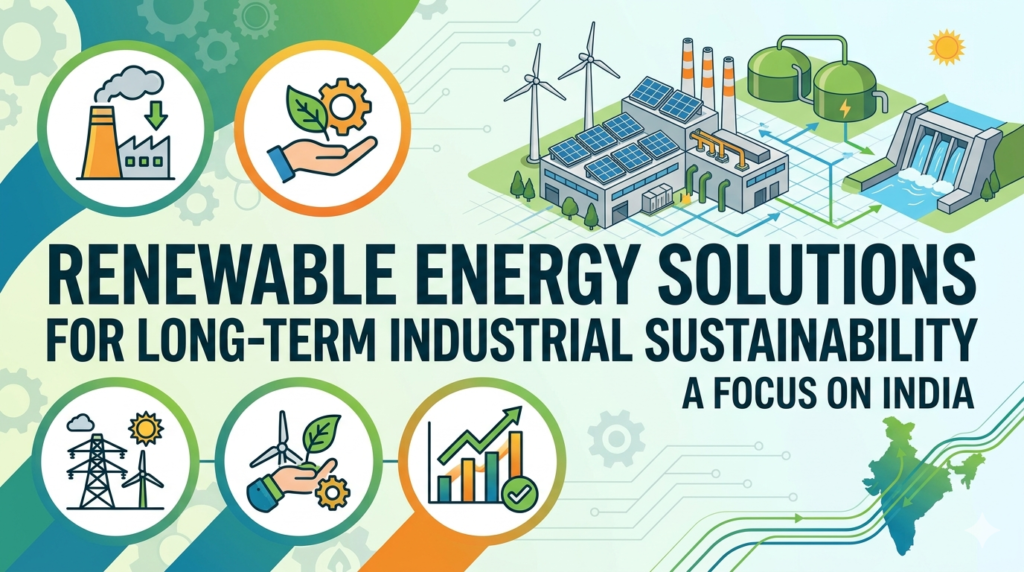
Why Industries in India Are Shifting Toward Renewable Energy
Industrial energy consumption in India accounts for a significant portion of total electricity usage. Traditional energy sources like coal and diesel not only increase operational costs but also expose businesses to price volatility and regulatory risks.
Renewable energy provides a smarter alternative by offering:
- Predictable and lower long-term energy costs
- Reduced dependence on fossil fuels
- Compliance with government sustainability mandates
- Enhanced brand reputation and ESG performance
Adopting renewable energy solutions India supports both profitability and sustainability two critical pillars for modern industries.
Types of Renewable Energy Solutions for Industries
1. Solar Power Systems
Solar energy is the most widely adopted renewable solution in India. Industrial rooftops, open land spaces, and parking areas can be utilized for solar panel installations.
Benefits:
- Immediate reduction in electricity bills
- Low maintenance costs
- 25+ years lifespan
- Government subsidies and tax benefits
Solar solutions are ideal for industries with high daytime energy consumption.
2. Biomass Energy Solutions
Biomass energy uses organic waste such as agricultural residue, wood chips, and industrial waste to generate power.
Benefits:
- Converts waste into energy
- Reduces disposal costs
- Provides continuous energy supply
This is especially beneficial for industries located in rural or agro-based regions.
3. Waste-to-Energy Technologies
Industries generating large volumes of waste can convert it into usable energy through advanced technologies like pyrolysis and gasification.
Benefits:
- Dual advantage: waste management + energy generation
- Reduces landfill dependency
- Supports circular economy goals
This aligns perfectly with sustainability and regulatory compliance.
4. Wind Energy Integration
Wind energy is suitable for industries located in high wind potential zones.
Benefits:
- High energy output for large-scale operations
- Long-term cost savings
- Ideal for captive power generation
Many industries combine wind and solar to ensure consistent power supply.
Renewable Energy Solutions India for Cost Reduction and Efficiency
One of the biggest drivers for adopting renewable energy solutions India industries rely on is cost optimization.
How Renewable Energy Reduces Costs:
1. Lower Electricity Bills
Solar and wind energy significantly reduce reliance on grid electricity, leading to major savings.
2. Protection from Tariff Fluctuations
Fossil fuel prices are volatile. Renewable energy offers stable and predictable costs.
3. Government Incentives
Industries benefit from:
- Accelerated depreciation
- Subsidies
- Net metering policies
4. Reduced Operational Expenses
Renewable systems require minimal maintenance compared to traditional energy infrastructure.
Government Policies Supporting Renewable Energy in India
The Indian government is actively promoting renewable energy adoption across industries through various initiatives:
- National Solar Mission
- Renewable Purchase Obligations (RPO)
- Net Metering Policies
- Production Linked Incentives (PLI)
These policies encourage industries to transition toward sustainable energy sources while reducing financial burden.
Key Industries Benefiting from Renewable Energy
1. Manufacturing Sector
High energy consumption makes renewable energy highly cost-effective.
2. Textile Industry
Continuous operations demand stable and affordable power supply.
3. Food Processing Units
Biomass and waste-to-energy solutions are ideal due to organic waste generation.
4. Chemical and Pharmaceutical Industries
Renewable energy helps meet strict environmental compliance standards.
Challenges in Adopting Renewable Energy Solutions
While the benefits are substantial, industries may face initial challenges:
- High upfront investment
- Space constraints for installations
- Technical integration with existing systems
However, these challenges are being addressed through innovative financing models like:
- Power Purchase Agreements (PPA)
- Leasing models
- Government-backed funding
Future of Renewable Energy in Industrial India
India is on track to become a global leader in renewable energy. With ambitious targets and continuous technological advancements, the future looks promising.
Key trends include:
- Hybrid energy systems (solar + wind)
- AI-based energy optimization
- Smart grids and energy storage solutions
- Decentralized energy generation
Industries that invest early in renewable energy solutions India will gain a significant competitive advantage.
How to Choose the Right Renewable Energy Solution
Selecting the right solution depends on multiple factors:
1. Energy Consumption Pattern
Analyze peak usage and operational hours.
2. Location and Resources
Solar exposure, wind availability, and raw material access.
3. Budget and ROI Expectations
Evaluate initial investment vs long-term savings.
4. Sustainability Goals
Align energy solutions with ESG and compliance requirements.
Partnering with an experienced energy solutions provider ensures seamless implementation and maximum ROI.
The transition to renewable energy is no longer optional for industries in India it is essential for long-term sustainability, cost efficiency, and regulatory compliance.
By adopting renewable energy solutions India, businesses can:
- Reduce operational costs
- Enhance environmental responsibility
- Improve energy independence
- Strengthen brand positioning
The sooner industries embrace this shift, the better positioned they will be for future growth.