As energy costs continue to rise and sustainability becomes a priority, industries in India are actively exploring cleaner alternatives. A well-informed comparison renewable energy technologies is crucial for businesses aiming to reduce operational expenses, improve efficiency, and meet environmental regulations.
From solar and wind to biomass and waste-to-energy, each renewable technology comes with its own advantages, limitations, and ideal use cases. Choosing the right one is not just a technical decision it’s a strategic investment that impacts long-term profitability.
In this blog, we provide a detailed comparison of renewable energy technologies specifically for industrial applications in India.
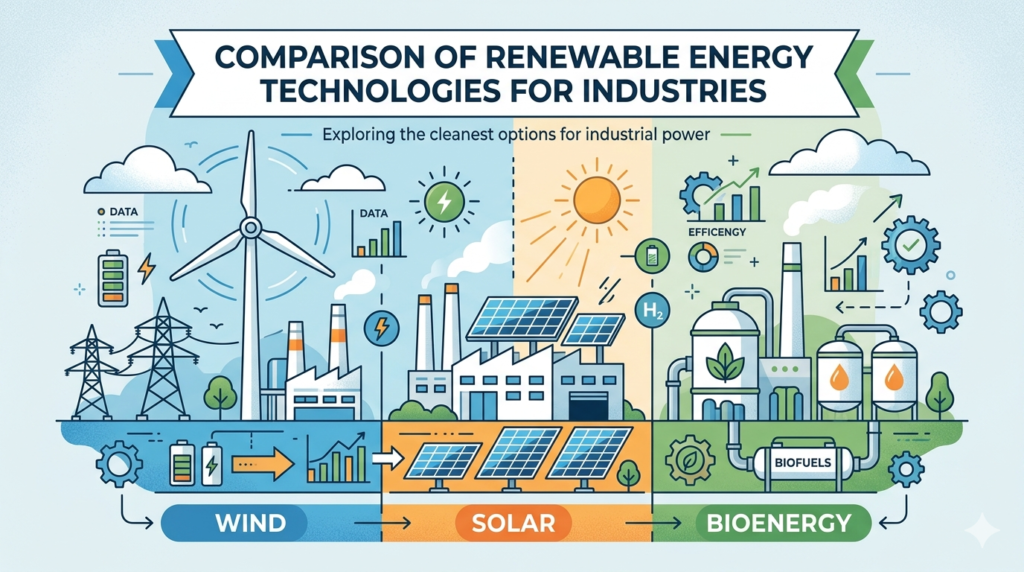
Why Industries Must Compare Renewable Energy Technologies
Every industrial setup has unique energy requirements depending on production scale, location, and operational hours. Without a proper comparison renewable energy technologies, businesses may end up investing in solutions that are either inefficient or financially unsustainable.
Here’s why comparison is essential:
- Cost Optimization: Helps identify the most affordable long-term solution
- Energy Reliability: Ensures consistent power supply
- Resource Utilization: Matches energy type with locally available resources
- Regulatory Compliance: Aligns with India’s renewable energy policies
- Sustainability Goals: Supports ESG and green initiatives
Industries that evaluate their options carefully often achieve faster ROI and better performance.
Key Renewable Energy Technologies for Industrial Use
1. Solar Energy
Solar energy is the most accessible and widely adopted renewable solution in India. With abundant sunlight across most regions, industries are increasingly installing rooftop or ground-mounted solar systems.
- Initial Investment: Moderate
- Operational Cost: Very low
- Efficiency: Moderate to high
- ROI Period: 3–5 years
Solar works best for industries with large rooftops or open land. It is ideal for reducing daytime electricity dependency and lowering power bills.
2. Wind Energy
Wind energy is suitable for large industries located in regions with consistent wind flow, such as coastal or elevated areas.
- Initial Investment: High
- Maintenance: Moderate
- Efficiency: High (location dependent)
- ROI Period: 5–8 years
Although wind energy offers high output, it requires careful site analysis and significant upfront investment.
3. Biomass Energy
Biomass energy is highly effective for industries that generate organic or agricultural waste. It converts waste materials into heat or electricity.
- Initial Investment: Moderate
- Maintenance: Moderate
- Efficiency: High
- ROI Period: 4–6 years
This technology is especially beneficial for agro-based industries, helping them manage waste while generating energy.
4. Waste-to-Energy (Pyrolysis & Gasification)
Waste-to-energy technologies are gaining popularity among manufacturing industries that deal with plastic, rubber, or industrial waste.
- Initial Investment: Medium to high
- Maintenance: Moderate
- Efficiency: High
- ROI Period: 3–6 years
This solution not only generates energy but also addresses waste disposal challenges, making it a dual-benefit investment.
5. Small-Scale Hydropower
Hydropower is one of the most efficient renewable energy sources but is limited to industries located near water bodies.
- Initial Investment: High
- Maintenance: Low
- Efficiency: Very high
- ROI Period: 6–10 years
While highly reliable, hydropower is not feasible for all industries due to geographical constraints.
Comparison Renewable Energy Technologies Based on Key Factors
To simplify decision-making, here is a direct comparison renewable energy technologies based on important industrial parameters:
| Technology | Investment | Efficiency | ROI Time | Maintenance | Suitability |
|---|---|---|---|---|---|
| Solar | Medium | Medium-High | 3–5 yrs | Low | Most industries |
| Wind | High | High | 5–8 yrs | Medium | Large industries |
| Biomass | Medium | High | 4–6 yrs | Medium | Agro industries |
| Waste-to-Energy | Medium-High | High | 3–6 yrs | Medium | Manufacturing |
| Hydropower | High | Very High | 6–10 yrs | Low | Location-specific |
How to Choose the Right Renewable Energy Technology
Selecting the right solution depends on multiple business-specific factors. A proper comparison renewable energy technologies should include:
1. Energy Consumption
Industries with high energy demand may benefit from hybrid systems combining multiple technologies.
2. Location
Geography plays a key role:
- Solar works almost everywhere in India
- Wind requires specific regions
- Hydropower depends on water availability
3. Budget & Investment Capacity
Businesses must balance upfront investment with long-term savings.
4. Waste Availability
Industries generating waste can leverage biomass or waste-to-energy solutions for maximum efficiency.
5. Government Incentives
Subsidies and policies vary across states and can influence decision-making.
Government Support for Renewable Energy in India
The Indian government strongly supports industrial adoption of renewable energy through:
- Subsidies on installation costs
- Accelerated depreciation benefits
- Net metering policies
- State-specific incentives
These initiatives significantly reduce financial burden and improve ROI for businesses.
Future Trends in Industrial Renewable Energy
The future of renewable energy in India is evolving rapidly. Key trends include:
- Hybrid energy systems (Solar + Waste-to-Energy)
- Energy storage solutions (battery systems)
- AI-based energy management systems
- Decentralized power generation
Industries adopting these trends early will gain a competitive edge in both cost savings and sustainability.
A detailed comparison renewable energy technologies enables industries to make smarter, data-driven decisions. There is no one-size-fits-all solution each technology serves a different purpose depending on the industry’s needs.
However, the right choice can deliver:
- Significant reduction in electricity costs
- Improved operational efficiency
- Sustainable and eco-friendly operations
- Long-term financial benefits
For most industries in India, a combination of solar and waste-to-energy solutions often provides the best balance of cost, efficiency, and sustainability.
If you’re planning to switch to renewable energy, the first step is choosing the right technology.
Get a customized consultation today to identify the best renewable energy solution for your industry and start saving costs while building a sustainable future.