Introduction
India is facing a growing challenge of managing agricultural and industrial dry waste efficiently. This case study waste to energy project highlights how pyrolysis technology is transforming waste into valuable energy while creating a profitable and sustainable business model.
In this blog, we break down a real-world implementation of a waste-to-energy project in India, focusing on technology, execution, ROI, and environmental impact.
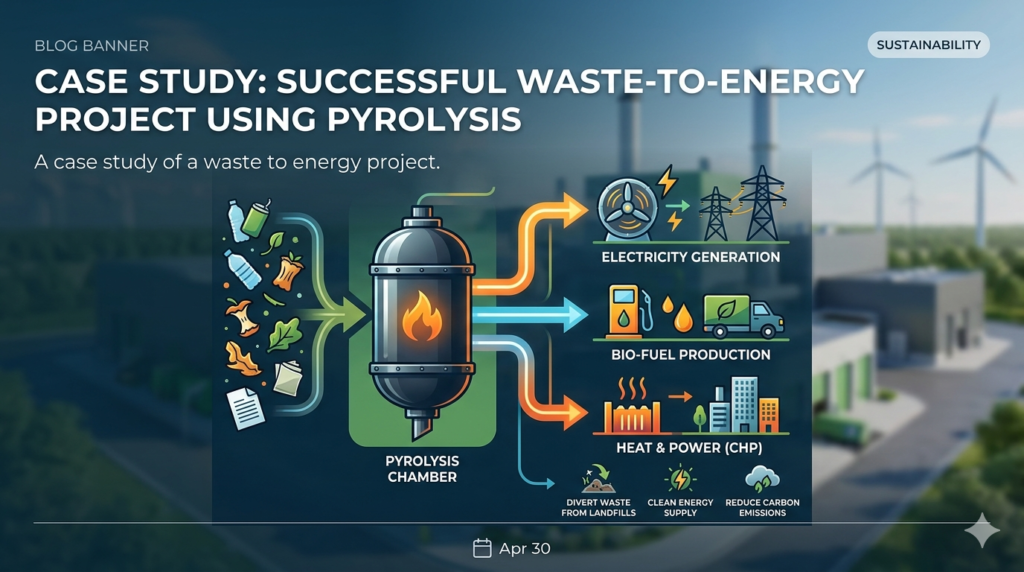
What is This Case Study Waste to Energy Project About?
This case study waste to energy project focuses on a medium-scale pyrolysis plant installed in a semi-urban region in India, where agricultural dry waste such as rice husk, coconut shells, and biomass residue was abundantly available.
Project Objective:
- Convert agricultural dry waste into usable fuel
- Reduce landfill and open burning
- Generate revenue through energy production
- Support local farmers and industries
Project Capacity:
- Waste processed: 8–10 tons per day
- Output: Fuel oil, carbon black, and syngas
Why Pyrolysis Was Chosen for This Project
Pyrolysis is one of the most efficient technologies for converting dry waste into energy without combustion.
Key Reasons:
- Works best with dry waste (high availability in India)
- Low emissions compared to incineration
- Multiple revenue streams
- Scalable and cost-effective
Input Materials Used:
- Agricultural dry waste
- Plastic waste (limited blending)
- Biomass residues
Project Implementation Strategy
The success of this case study waste to energy project depended heavily on planning and execution.
1. Site Selection
- Located near farms to reduce transportation cost
- Easy access to road infrastructure
2. Raw Material Sourcing
- Tie-ups with local farmers
- Contracts with agro-processing units
3. Technology Setup
- Continuous pyrolysis reactor
- Pollution control systems installed
- Automated feeding and output systems
4. Workforce Training
- Skilled operators trained for plant handling
- Safety and maintenance protocols implemented
Output and Revenue Generation
One of the biggest strengths of this case study waste to energy project is its multiple income streams.
Outputs Generated:
| Output Product | Usage | Revenue Potential |
|---|---|---|
| Fuel Oil | Industrial fuel | High |
| Carbon Black | Manufacturing, rubber industry | Medium |
| Syngas | Internal energy use | Cost-saving |
Monthly Revenue Estimate:
- ₹25–40 lakhs depending on capacity and demand
Environmental Impact of the Project
This case study waste to energy project demonstrates strong environmental benefits.
Key Impact Metrics:
- Reduction in open burning of waste
- Lower greenhouse gas emissions
- Decreased landfill dependency
- Cleaner local environment
Sustainability Contribution:
- Supports circular economy
- Converts waste into reusable resources
Challenges Faced and Solutions
No project is without hurdles. This case study waste to energy project also faced initial challenges.
Challenges:
- Inconsistent raw material supply
- Initial capital investment
- Lack of awareness among stakeholders
Solutions:
- Long-term supplier contracts
- Government subsidy utilization
- Awareness campaigns for farmers and industries
ROI and Business Viability
A major highlight of this case study waste to energy project is its strong return on investment.
Investment Details:
- Initial setup cost: ₹1.5–3 crore
- Break-even period: 12–24 months
Profit Drivers:
- High demand for alternative fuel
- Low-cost raw materials
- Government incentives
Why This Model Works in India
India provides an ideal ecosystem for such projects.
Key Advantages:
- Abundant agricultural dry waste
- Growing energy demand
- Government push for renewable energy
- Rising environmental awareness
This makes replicating this case study waste to energy project highly feasible across multiple regions.
Who Should Invest in Waste to Energy Projects?
This model is perfect for:
- Entrepreneurs looking for sustainable businesses
- Agro-industries
- Waste management companies
- Investors seeking high ROI sectors
Future Scope of Waste to Energy in India
The future of waste-to-energy projects, especially pyrolysis-based systems, is extremely promising.
Growth Opportunities:
- Expansion into rural and semi-urban areas
- Integration with smart city initiatives
- Export opportunities for by-products
India is expected to become a major hub for waste-to-energy solutions in the coming years.
This case study waste to energy project proves that waste is not just a problem it’s a powerful opportunity. By leveraging pyrolysis technology, businesses can turn agricultural dry waste into profitable energy solutions while contributing to a cleaner environment.
If you’re looking to invest in a high-growth, sustainable, and future-ready business model, waste-to-energy projects are the way forward.
CTA
Looking to start your own waste-to-energy project in India?
Get expert consultation on setup, technology, and ROI planning tailored to your location and business goals.