Introduction
The demand for sustainable waste management is rapidly growing across India, making waste-to-energy (WTE) projects a high-potential investment opportunity. If you’re planning to enter this sector, understanding the waste to energy project cost India is the first and most critical step.
From municipal solid waste processing to power generation infrastructure, multiple variables influence the total investment. In this guide, we break down real costs, key factors, and practical insights to help you evaluate whether a WTE project is viable for your business.
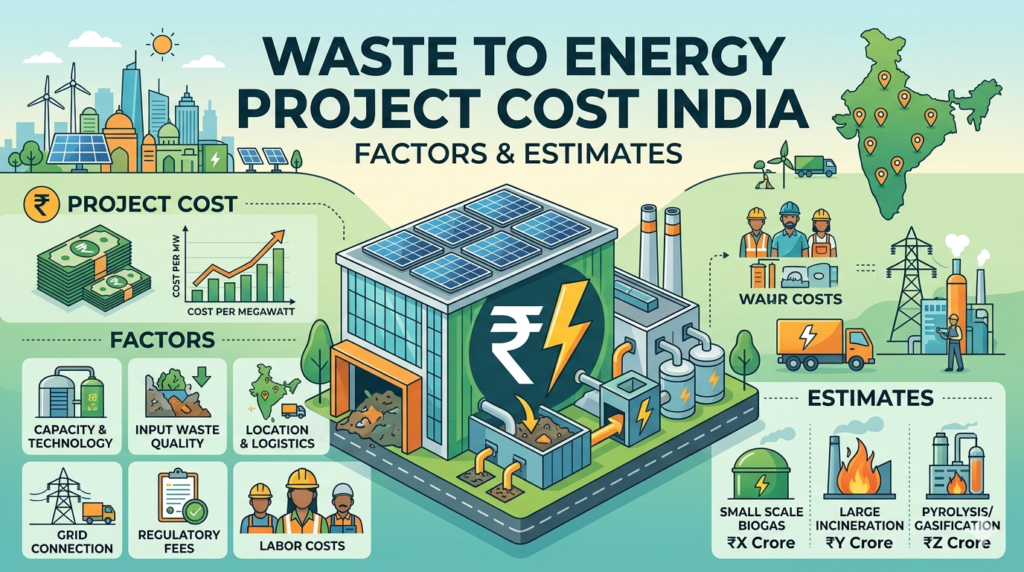
What is a Waste-to-Energy Project?
A waste-to-energy project converts waste materials into usable forms of energy such as electricity, heat, or fuel. Technologies commonly used in India include:
- Incineration
- Pyrolysis
- Gasification
- Anaerobic digestion
These plants help reduce landfill waste while generating renewable energy, making them a preferred solution for urban waste challenges.
Waste to Energy Project Cost India (Overview)
The waste to energy project cost India varies significantly depending on plant size, technology, and location.
Estimated Cost Range:
| Plant Capacity | Estimated Cost |
|---|---|
| Small Scale (5–10 TPD) | ₹5 Crore – ₹15 Crore |
| Medium Scale (50–200 TPD) | ₹30 Crore – ₹150 Crore |
| Large Scale (300+ TPD) | ₹200 Crore – ₹600+ Crore |
Key Factors Affecting Waste to Energy Project Cost India
1. Plant Capacity & Scale
The biggest cost driver is plant size. Larger plants require more infrastructure, machinery, and operational setup but they also offer better economies of scale.
- Small plants = lower investment but limited output
- Large plants = high initial cost but higher long-term profitability
2. Technology Selection
Different technologies have different cost implications:
- Incineration – High capital cost but widely used
- Pyrolysis – Moderate cost, suitable for plastic waste
- Gasification – Efficient but requires high investment
- Anaerobic digestion – Cost-effective for organic waste
Choosing the right technology directly impacts your ROI and operational expenses.
3. Land & Location Costs
Land prices vary significantly across India.
- Urban areas = higher land cost but better waste availability
- Rural areas = lower cost but logistical challenges
You also need space for:
- Waste storage
- Processing units
- Power generation setup
- Pollution control systems
4. Machinery & Equipment
This includes:
- Waste segregation systems
- Shredders and crushers
- Boilers and turbines
- Pollution control units
Machinery alone can account for 40–60% of the total project cost.
5. Government Approvals & Compliance
WTE projects require multiple approvals:
- Pollution Control Board clearance
- Environmental Impact Assessment (EIA)
- Local municipal permissions
Compliance costs include:
- Documentation
- Legal fees
- Environmental safeguards
6. Operational & Maintenance Costs
Even after setup, ongoing costs include:
- Labor
- Maintenance
- Waste collection and transportation
- Energy consumption
These recurring expenses must be considered when calculating overall investment.
7. Power Generation & Grid Connection
Costs involved in:
- Electricity generation units
- Grid connectivity
- Power distribution systems
Additional investment may be required depending on state regulations and infrastructure.
Hidden Costs You Must Not Ignore
Many investors underestimate these:
- Waste segregation inefficiencies
- Downtime due to maintenance
- Technology failure risks
- Skilled workforce requirements
Ignoring these can significantly increase the actual waste to energy project cost India.
Government Subsidies & Financial Support
India promotes WTE projects under renewable energy initiatives.
Available Benefits:
- Capital subsidies
- Viability Gap Funding (VGF)
- Power purchase agreements (PPAs)
- Tax benefits
Organizations like MNRE (Ministry of New and Renewable Energy) support such projects, reducing financial burden.
ROI & Profitability of Waste to Energy Projects
Despite high initial investment, WTE projects can generate multiple revenue streams:
Revenue Sources:
- Electricity sales
- Tipping fees from municipalities
- Sale of by-products (ash, biochar, fuel)
ROI Timeline:
- Break-even: 5–8 years
- Long-term profitability: High
A properly planned project can deliver consistent returns while contributing to sustainability.
Is Waste to Energy a Good Investment in India?
Yes if planned strategically.
Why It Works:
- Increasing waste generation in cities
- Government support and policies
- Growing demand for renewable energy
- Environmental compliance pressure on industries
However, success depends on:
- Correct feasibility study
- Technology selection
- Efficient operations
How to Reduce Waste to Energy Project Cost India
Here are practical ways to optimize costs:
- Start with a scalable plant model
- Choose location with low land cost but good waste supply
- Use locally manufactured machinery
- Partner with municipalities
- Apply for government subsidies
Understanding the waste to energy project cost India is essential before entering this high-investment but high-impact sector. Costs can range from ₹5 crore to ₹600+ crore depending on scale and technology, but with the right planning, the returns can be substantial.
As India moves toward sustainable waste management, WTE projects present a powerful opportunity for businesses, investors, and municipalities alike.
If you’re considering starting a waste-to-energy plant, now is the right time to evaluate costs, explore government incentives, and build a scalable, future-ready solution.
Call to Action
Looking to start a waste-to-energy project in India?
Get expert consultation on:
- Cost estimation
- Technology selection
- Government approvals
- End-to-end project setup
Contact us today to turn waste into a profitable energy opportunity.