India generates massive amounts of agricultural and organic waste every year, much of which goes unused or is burned, causing pollution. This is where biomass to fuel conversion becomes a powerful solution. It transforms waste into valuable energy, helping industries reduce costs and support sustainability.
If you are looking to understand biomass to fuel conversion, this guide explains the complete step-by-step process, its benefits, and how businesses in India can leverage it for energy and waste management.
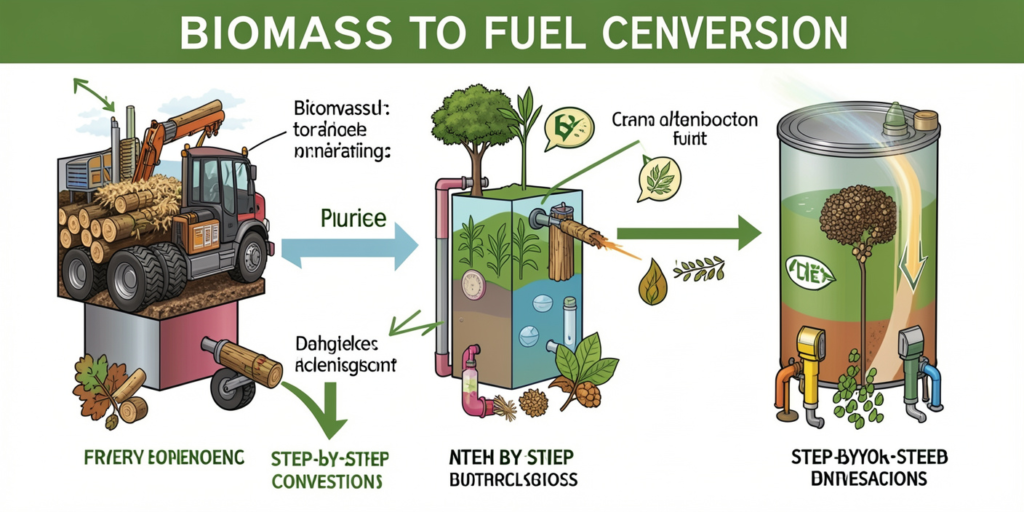
What Is Biomass to Fuel Conversion?
Biomass to fuel conversion is the process of transforming organic materials such as agricultural waste, wood, crop residue, and organic industrial waste into usable fuels like bio-oil, biogas, biochar, and syngas.
Instead of treating biomass as waste, this process converts it into renewable energy. This is especially important in India, where crop residue burning is a major environmental issue.
Biomass to Fuel Conversion: Step-by-Step Process
1. Biomass Collection
The first step in biomass to fuel conversion is collecting raw materials. Common biomass sources in India include:
- Crop residues (rice husk, wheat straw)
- Sugarcane bagasse
- Wood chips
- Coconut shells
- Organic industrial waste
Reliable sourcing is critical for continuous fuel production.
2. Segregation and Drying
Collected biomass is sorted to remove impurities like metals, stones, and plastics. After that, it is dried to reduce moisture content.
Low moisture improves energy efficiency and ensures better output during conversion.
3. Size Reduction (Shredding)
Large biomass materials are shredded into smaller, uniform pieces. This step ensures:
- Better heat transfer
- Faster conversion
- Consistent fuel output
Uniform feedstock is essential for efficient biomass to fuel conversion.
4. Thermal Conversion Process
The processed biomass is then subjected to thermal conversion methods. The most common ones include:
- Pyrolysis (heating without oxygen)
- Gasification (limited oxygen)
- Torrefaction (mild heating)
Among these, pyrolysis is widely used in India for converting biomass into fuel oil and gas.
5. Fuel Generation
During thermal processing, biomass breaks down into different outputs:
- Bio-oil: Used as an alternative industrial fuel
- Syngas: Used for heat or electricity generation
- Biochar: Used in agriculture or as fuel
This is the core of biomass to fuel conversion, where waste becomes usable energy.
6. Cooling and Condensation
The vapors released during the process are cooled to form liquid fuel (bio-oil). Non-condensable gases are separated and often reused within the system.
This step improves overall energy efficiency and reduces waste.
7. Storage and Utilization
The final products are stored and distributed for industrial or commercial use:
- Bio-oil replaces furnace oil in industries
- Syngas powers generators
- Biochar is used in soil improvement or carbon applications
This completes the biomass to fuel conversion cycle.
Why Biomass to Fuel Conversion Is Important in India
India faces two major challenges: waste management and energy demand. Biomass to fuel conversion addresses both at the same time.
Reduces Crop Burning
Farmers often burn crop residue, causing severe air pollution. Converting this biomass into fuel offers an eco-friendly alternative.
Supports Renewable Energy Goals
India is actively promoting renewable energy. Biomass conversion contributes to cleaner energy production.
Reduces Dependence on Fossil Fuels
Industries can use bio-oil and syngas as alternatives to coal and diesel, reducing fuel costs.
Creates Rural Economic Opportunities
Biomass plants can generate income and jobs in rural areas where raw materials are abundant.
Key Benefits of Biomass to Fuel Conversion
1. Waste to Energy Utilization
Turns agricultural and organic waste into valuable fuel.
2. Lower Carbon Emissions
Cleaner than traditional fossil fuels and open burning.
3. Cost Savings for Industries
Reduces fuel expenses by using alternative energy sources.
4. Scalable for Multiple Industries
Suitable for manufacturing, agriculture, and waste management sectors.
5. Circular Economy Support
Promotes reuse and sustainability by converting waste into resources.
Industries That Can Benefit
Biomass to fuel conversion is highly relevant for:
- Manufacturing industries
- Food processing units
- Sugar mills
- Paper and pulp industries
- Waste management companies
- Agro-based industries
Any business generating organic waste can turn it into energy and reduce operational costs.
Challenges to Consider
To build trust and realistic expectations, here are key challenges:
Feedstock Availability
Consistent biomass supply is necessary for smooth operations.
Initial Investment
Setting up a biomass conversion plant requires capital investment.
Technology Selection
Choosing the right conversion method impacts efficiency and ROI.
Regulatory Compliance
Projects must comply with environmental norms in India.
Business Opportunity in India
The demand for sustainable energy is increasing rapidly. Biomass to fuel conversion presents a strong opportunity for:
- Entrepreneurs entering waste-to-energy sector
- Industries aiming to reduce energy costs
- Investors looking for green energy solutions
With government support and rising environmental awareness, this sector is expected to grow significantly.
Biomass to fuel conversion is not just a waste management solution it is a strategic energy opportunity for India. By converting agricultural and organic waste into fuel, businesses can reduce costs, minimize environmental impact, and create new revenue streams.
From collection to fuel generation, the step by step process shows how efficiently biomass can be transformed into valuable energy. For industries and entrepreneurs looking to invest in sustainable solutions, biomass conversion is a future-ready technology worth adopting.