India is generating increasing volumes of municipal, industrial, agricultural, and plastic waste every year. Managing this waste efficiently is no longer just an environmental priority but also an economic necessity. This is where waste to energy technology is becoming a practical solution. It helps convert non-recyclable waste into useful forms of energy such as electricity, heat, fuel, or gas. For industries, municipalities, and infrastructure developers in India, adopting the right waste-to-energy approach can reduce landfill pressure, lower disposal costs, and support sustainable energy goals.
In this blog, we will explain how waste to energy technology works, its main processes, advantages, challenges, and where it is being applied in India.
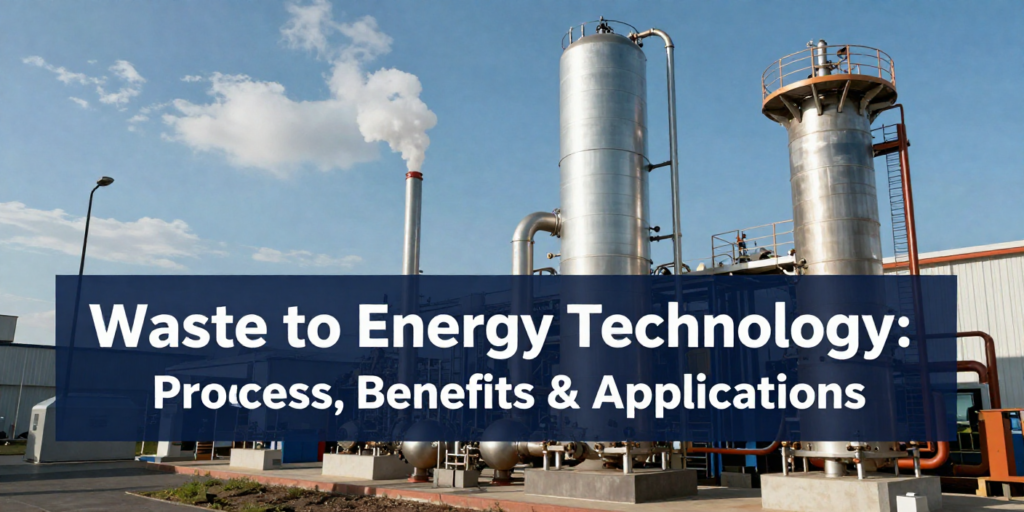
What Is Waste to Energy Technology?
Waste to energy technology refers to a group of systems and processes that convert waste materials into usable energy. Instead of sending all waste to landfills, these technologies recover value from waste in the form of electricity, heat, biofuels, syngas, or other energy products.
This approach is especially useful for treating non-recyclable dry waste, agricultural residue, organic waste, and selected industrial by-products. In a country like India, where landfill capacity is limited and energy demand continues to grow, waste-to-energy offers both environmental and commercial advantages.
How Waste to Energy Technology Works
The working model of waste to energy technology depends on the type of waste and the conversion process being used. However, the general flow usually includes the following steps:
1. Waste Collection and Segregation
The first step is collecting waste from industrial, commercial, municipal, or agricultural sources. This waste must then be segregated properly. Recyclables, inert materials, wet waste, and hazardous materials are separated to ensure only suitable feedstock enters the conversion process.
2. Feedstock Preparation
Prepared waste is dried, shredded, or processed depending on the technology. Uniform feedstock improves plant efficiency and helps maintain consistent output quality.
3. Thermal, Biological, or Chemical Conversion
At this stage, the selected technology converts waste into energy. The exact process may involve combustion, pyrolysis, gasification, anaerobic digestion, or refuse-derived fuel production.
4. Energy Recovery
The output generated may be in the form of electricity, thermal energy, synthetic gas, bio-oil, or fuel pellets. These outputs can then be used on-site or supplied for industrial and commercial applications.
5. Residue Management
The remaining ash, char, digestate, or other residues are managed based on environmental regulations and potential reuse options.
7 Major Waste to Energy Technology Processes
To understand the real scope of waste to energy technology, it is important to know the major methods used in India and globally.
1. Incineration
Incineration involves burning waste at high temperatures to generate heat, which is then used to produce steam and electricity. It is one of the oldest waste-to-energy methods and is often used for municipal solid waste.
Best for: Mixed combustible waste
Output: Heat, steam, electricity
2. Pyrolysis
Pyrolysis heats carbon-rich waste such as plastic, biomass, or tyres in the absence of oxygen. This process produces pyrolysis oil, syngas, and char.
Best for: Plastic waste, biomass, tyre waste
Output: Oil, gas, char
3. Gasification
Gasification partially oxidizes waste at high temperatures to create syngas. This gas can be used for heat, electricity, or as a chemical feedstock.
Best for: Biomass, RDF, industrial waste
Output: Syngas, thermal energy
4. Anaerobic Digestion
This biological process breaks down organic waste in an oxygen-free environment to produce biogas and digestate.
Best for: Food waste, sewage sludge, agricultural waste
Output: Biogas, organic residue
5. Refuse-Derived Fuel (RDF)
RDF is produced by processing dry combustible waste into fuel pellets or fluff that can be used in cement kilns, boilers, and industrial furnaces.
Best for: Dry mixed waste, commercial waste
Output: Alternative industrial fuel
6. Biomethanation
Biomethanation is a controlled process similar to anaerobic digestion used to generate methane-rich biogas from biodegradable waste.
Best for: Wet organic waste
Output: Biogas, slurry
7. Landfill Gas Recovery
Landfills generate methane as organic waste decomposes. This gas can be captured and used as an energy source.
Best for: Existing landfill sites
Output: Methane-based energy
Benefits of Waste to Energy Technology in India
There are strong reasons why waste to energy technology is attracting attention from both public and private sectors in India.
Reduces Landfill Dependency
Landfills occupy large areas, create odour issues, and generate environmental risks. Waste-to-energy systems reduce the amount of waste ending up in dumping grounds.
Generates Useful Energy
These technologies convert waste into electricity, fuel, heat, or gas. This recovered energy can support industrial operations and local power needs.
Supports Cleaner Waste Management
Instead of open dumping or uncontrolled burning, waste-to-energy provides a structured method of handling non-recyclable waste.
Encourages Resource Recovery
Waste is no longer treated as a dead end. It becomes a source of energy and value creation.
Improves Sustainability Goals
Businesses and municipalities can align their operations with sustainability, ESG, and circular economy objectives.
Helps Manage Plastic and Agricultural Waste
India faces serious challenges in both plastic waste disposal and agricultural residue management. Waste-to-energy technologies can support better handling of these streams.
Applications of Waste to Energy Technology
The application of waste to energy technology is expanding across several sectors in India.
Municipal Corporations
Urban local bodies can use waste-to-energy plants to reduce landfill burden and manage city waste more effectively.
Manufacturing Industries
Factories producing combustible process waste can convert it into fuel or power for internal use.
Agriculture and Rural Clusters
Biomass and crop residue can be processed into energy products, helping reduce stubble burning and waste accumulation.
Commercial Establishments
Hotels, food processing units, malls, and institutional campuses can use organic waste conversion systems like biogas and biomethanation.
Cement and Heavy Industries
RDF and other waste-derived fuels can be used as substitutes for traditional fossil fuels.
Challenges in Implementing Waste to Energy Technology
Despite its potential, successful deployment of waste to energy technology in India depends on realistic planning.
Poor Waste Segregation
Mixed and contaminated waste reduces plant efficiency and affects output quality.
High Initial Investment
Plant setup, pollution control systems, and feedstock handling infrastructure require capital investment.
Technology Selection Issues
Not every technology is suitable for every waste stream. Wrong selection can affect profitability and performance.
Regulatory Compliance
Environmental permissions, emissions control, and residue disposal standards must be followed carefully.
Public Awareness and Acceptance
Waste-to-energy projects often require stakeholder education to avoid misconceptions and build trust.
How to Choose the Right Waste to Energy Technology
Choosing the right waste to energy technology depends on several operational factors:
- Type and volume of waste available
- Moisture and calorific value of feedstock
- Desired energy output
- Budget and plant scale
- Regulatory requirements
- End-use market for fuel, gas, or electricity
For Indian businesses, the best results usually come from working with experienced waste-to-energy solution providers who understand both technical and compliance requirements.
Why Waste to Energy Technology Matters for India’s Future
India needs scalable waste solutions that go beyond collection and dumping. With rapid urbanization, industrial growth, and rising energy demand, waste-to-energy can play a major role in the country’s transition toward cleaner infrastructure.
It offers a strong combination of waste reduction, energy recovery, and environmental improvement. While it is not a replacement for recycling and waste reduction, it is an important part of an integrated waste management strategy.
For businesses, municipalities, and project developers, investing in the right waste to energy technology can create long-term operational and sustainability benefits.
Waste to energy technology is transforming how India can handle non-recyclable waste. By converting waste into electricity, fuel, gas, or heat, these systems offer a practical solution to landfill pressure, rising waste volumes, and energy recovery needs.
From pyrolysis and gasification to RDF and anaerobic digestion, the right technology depends on the waste type, project scale, and business objective. For organizations looking to reduce waste costs and improve sustainability performance, waste-to-energy is no longer an alternative concept. It is becoming a strategic necessity.
If your business or municipality is exploring efficient waste management and energy recovery solutions in India, this is the right time to assess which waste-to-energy model can deliver both environmental and commercial value.